
The primary advantage of agile development is its ability to deliver the right product, faster. By building and releasing working software in small, iterative cycles, businesses can adapt to real-time market feedback, mitigate project risks, and achieve a significantly higher return on investment compared to traditional methods. Agile is not just a process; it's a strategic business advantage.
Why Agile Development Is a Business Imperative

At its core, Agile represents a strategic pivot from rigid, long-term planning to a flexible process focused entirely on delivering measurable value. To understand its impact, it's essential to compare it against its predecessor: the traditional Waterfall model.
In a Waterfall project, every detail must be mapped out upfront in a comprehensive blueprint. The project then progresses through long, sequential phases of development, testing, and deployment. The inherent weakness of this model is its rigidity. If market conditions change or a critical flaw is discovered late in the process, the project faces significant budget overruns and delays. It's an attempt to predict the future—a notoriously unreliable business strategy.
The Agile Alternative to Rigid Planning
Agile operates on a fundamentally different principle. Instead of a single, massive launch, it emphasizes a series of short, iterative cycles known as sprints. The objective of each sprint is to deliver a small, functional, and polished increment of the product.
This iterative approach transforms development from a high-stakes gamble into an adaptive, intelligence-driven process. Your team builds a core feature, releases it to users, and gathers immediate feedback. This continuous feedback loop ensures the final product solves real-world problems, not just the ones you assumed existed months or years prior.
The data confirms this. Organizations that adopt Agile report a 75% project success rate, a substantial improvement over the 56% average for traditional methods. This efficacy is why Agile adoption among software teams surged from 37% to 86% in a single year, cementing its role as a modern standard.
Agile Development vs. Traditional Waterfall: A Comparison
| Characteristic | Agile Development | Traditional Waterfall |
|---|---|---|
| Planning | Adaptive and ongoing; plans evolve based on feedback. | Upfront and comprehensive; changes are difficult and costly. |
| Delivery Cycle | Short sprints (1-4 weeks) delivering small, valuable increments. | Long, sequential phases spanning months or years. |
| Feedback | Continuous feedback from stakeholders and users is integrated. | Feedback is gathered late, typically after major development phases. |
| Flexibility | High; changes are welcomed and incorporated to maximize value. | Low; the rigid structure resists change, increasing risk. |
| Risk | Lower; issues are identified and resolved early in each sprint. | High; problems are often discovered too late, causing major setbacks. |
| Customer Involvement | High and consistent throughout the entire project lifecycle. | Limited to the initial requirements and final acceptance phases. |
This table highlights why Agile is more than a different process—it’s a superior business strategy that shifts the mindset from rigid prediction to flexible, value-driven execution.
How the Benefits of Agile Translate to Business Growth
This transition from a fixed plan to an adaptive one directly impacts your bottom line. Adopting agile principles enables you to build a more resilient, market-aware organization and achieve tangible business outcomes:
- Faster Time-to-Market: Getting a functional product to market sooner means you can start generating revenue and gathering user data while competitors are still in the planning phase.
- Reduced Development Risk: Small, frequent releases allow for early detection and correction of issues, preventing them from escalating into costly failures.
- Greater Customer Satisfaction: The product is continuously shaped by user feedback, resulting in a final solution that genuinely meets customer needs and expectations.
- Improved Financial Returns: Investment is focused on features that deliver proven value, eliminating wasted resources on functionality that users don't want.
At Group107, our dedicated teams are structured to embed these principles into your project from day one. To see how this process works in detail, explore our in-depth guide on the agile methodology in the software development lifecycle.
Accelerate Time-to-Market and Realize Faster ROI
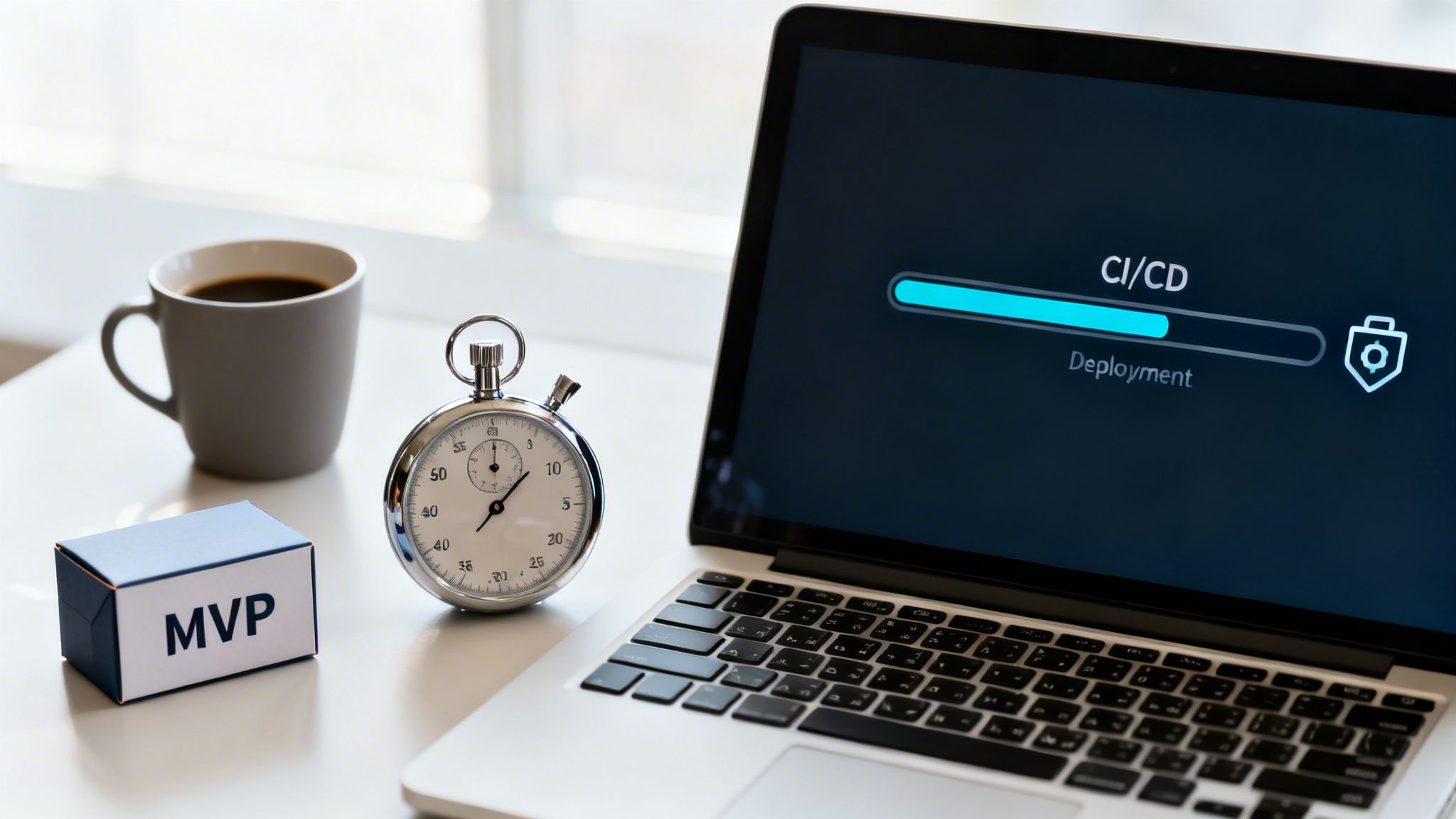
In a competitive landscape, speed is a critical advantage. A primary benefit of the agile approach is its ability to drastically reduce the time it takes to deliver a working product, accelerating your return on investment (ROI).
Instead of waiting for a "big bang" launch, Agile utilizes short, iterative sprints to build, test, and release a Minimum Viable Product (MVP) in a fraction of the time. This strategy allows you to not only launch sooner but also to start generating revenue, capturing market share, and collecting invaluable user feedback while competitors are still drafting requirements. This is a core tenet of the rapid application development methodology.
From Concept to Cash Flow in Record Time
The entire agile process is engineered for velocity. By breaking a large project into small, manageable increments, teams deliver tangible value on a predictable schedule. This removes the guesswork from development timelines and provides stakeholders with clear visibility into progress.
Consider a fintech SaaS company entering the digital payments market. A traditional Waterfall model might require over a year to build a comprehensive platform. With Agile, the same company could launch a core payment processing feature within months. This early launch secures initial users and generates revenue that can directly fund the development of subsequent features.
The strategic shift from a single, high-risk launch to a series of value-driven releases is the key to faster ROI. You gain market validation—and revenue—early and often, rather than waiting years to discover if you built the right solution.
Measuring Speed with Actionable Agile Metrics
Agile teams rely on key performance indicators (KPIs) to measure velocity and efficiency, providing hard data on how quickly ideas are converted into shipped code.
- Cycle Time: This metric tracks the time a task takes to move from "in progress" to "done." A short cycle time is a clear indicator of an efficient workflow, demonstrating the team's ability to execute without bottlenecks.
- Time to Value (TTV): This measures the time from feature request to the moment it's live and delivering value to a customer. A low TTV directly reflects your organization's agility in responding to market demands.
How Group107 Automates Acceleration with DevOps
Achieving this level of speed requires more than just agile project management; it demands a robust technical foundation that supports rapid, continuous releases. A strong DevOps culture is non-negotiable.
At Group107, our DevOps services are designed to amplify the benefits of agile development. We implement powerful Continuous Integration and Continuous Deployment (CI/CD) pipelines that automate the build, test, and deployment process. This automation eliminates manual errors, reduces risk, and dramatically shortens release cycles. For our clients, this means developers can focus on building high-value features, confident that their code can be deployed to production safely and almost instantaneously.
Enhance Product Quality and Customer Satisfaction
Great products are never built in a vacuum. One of the most significant benefits of agile development is its proven ability to produce higher-quality software that customers love. This is achieved through a continuous feedback loop that ensures the product remains aligned with real user needs from start to finish.
In traditional models, quality assurance (QA) was often a final phase before launch—a high-risk approach where discovering bugs is exponentially more expensive and difficult to fix. Agile inverts this by integrating testing and quality checks throughout the entire development process, making quality a shared responsibility.
Embedding Quality in Every Sprint
With Agile, quality is a daily practice, not an afterthought. By testing small, functional increments in every sprint, teams can identify and resolve issues while they are minor and manageable. This "shift-left" approach to testing drastically reduces technical debt and prevents small bugs from escalating into systemic failures.
This relentless focus on quality has a direct impact on the end-user experience. The product is more stable, reliable, and performant because it has been rigorously validated at every stage. This is how you build software that not only functions correctly but also delights users.
The Role of the Product Owner in Driving Satisfaction
The Product Owner is the central figure responsible for ensuring the product meets customer and business expectations. This role acts as the voice of the customer, guiding the development team to build features that deliver maximum value.
The Product Owner’s contributions are critical for success:
- Prioritizing the Backlog: They meticulously manage the product backlog, ensuring the team is always working on features that provide the most immediate business and user value.
- Guiding Sprint Reviews: During sprint reviews, the Product Owner facilitates feedback sessions with stakeholders to validate that the latest increment meets requirements.
- Aligning with Business Goals: They maintain a clear product vision, ensuring every sprint contributes directly to achieving larger strategic objectives.
This rhythm of communication and validation keeps the project focused on what customers truly need. The results are clear: higher user adoption, lower churn, and a stronger brand reputation.
An agile team that regularly demos working software to stakeholders is 90% more likely to build a product that meets customer needs. This transparent process eliminates guesswork and ensures the final product delivers genuine value.
Real-World Example: An E-commerce Checkout Optimization
A Group107 client in the e-commerce sector was struggling with a high cart abandonment rate. A traditional approach would have involved a months-long overhaul of the entire checkout flow based on assumptions. Instead, they adopted an agile strategy.
In the first sprint, the team focused on a single change: simplifying the payment options. After release, they analyzed the data and saw a minor improvement. However, user feedback and A/B testing identified the shipping address form as the primary bottleneck. In the next sprint, the team implemented an address auto-complete feature. This single, targeted change led to a 22% increase in checkout conversions—a massive win achieved quickly and with minimal risk.
Integrating Accessibility for True Product Quality
At Group107, we believe "quality" is incomplete without accessibility. True quality means building for everyone. That’s why our accessibility services are integrated directly into our agile workflow. By conducting WCAG compliance checks and accessibility testing in every sprint, we ensure digital products are usable by people with disabilities from the outset. This not only expands your market reach but is also a hallmark of a truly high-quality, inclusive product.
Increase Flexibility and Adapt to Market Changes
The only constant in modern business is change. Markets shift, customer expectations evolve, and new competitors emerge. A core benefit of agile development is its inherent capacity to not only manage this uncertainty but to leverage it as a competitive advantage. It provides the framework to adapt on the fly, ensuring your projects remain relevant and valuable.
Traditional project models treat change as a crisis, often derailing timelines and budgets. Agile, in contrast, builds adaptation directly into its process. Through short development sprints and continuous planning, teams can welcome new requirements without causing systemic disruption. This structural flexibility is what separates market leaders from their followers.
Responding to Change Without Derailing Progress
The iterative nature of Agile means your team is never locked into a rigid, long-term plan. At the end of each sprint, you have a natural opportunity to pause, assess the market, and adjust priorities for the next cycle.
This cadence allows you to pivot based on new intelligence—whether it's user feedback, a competitor's move, or emerging technology. The ability to make these rapid course corrections minimizes wasted effort and keeps the team focused on delivering what is most valuable right now.
A business that can pivot quickly doesn't just survive—it thrives. Agile provides the mechanism to absorb market shocks and reorient resources toward emerging opportunities, transforming potential disruptions into strategic gains.
How Agile Manages Scope Creep Effectively
A common project fear is scope creep—the uncontrolled expansion of features and requirements. The Waterfall model is particularly vulnerable to this, as new requests can trigger chaotic and costly revisions. Agile manages scope through transparency and disciplined prioritization.
In frameworks like Scrum, all potential work resides in a single, prioritized product backlog, which is actively managed by the Product Owner.
- Transparent Prioritization: Any new feature request must be evaluated against existing priorities. This forces a critical business decision: "Is this new idea more important than what we've already planned?"
- Controlled Sprints: Once a sprint begins, its scope is locked. This protects the development team from distractions and allows them to focus on delivering a high-quality increment.
- Value-Based Decisions: Instead of simply adding more features, the Product Owner and stakeholders make strategic trade-offs, ensuring every development hour is spent on work that generates the most business impact.
Real-World Example: A SaaS Company's AI-Powered Pivot
Imagine a SaaS company in the project management space. A new competitor enters the market with a platform featuring an AI assistant for report automation. Under a traditional model, reacting would take months, risking significant customer churn.
With Agile, the company responds immediately. The Product Owner adds "AI-powered reporting" to the top of the backlog for the next sprint. Within two weeks, the team develops a basic version of the feature and releases it to a select group of enterprise users for feedback.
This fast, targeted response not only neutralizes the competitive threat but also demonstrates a commitment to innovation that strengthens client loyalty. This is how Group107’s embedded teams operate—providing the visibility and control to make swift, strategic moves. This level of flexibility is one of the most powerful benefits of agile development.
Improve Team Morale and Stakeholder Collaboration
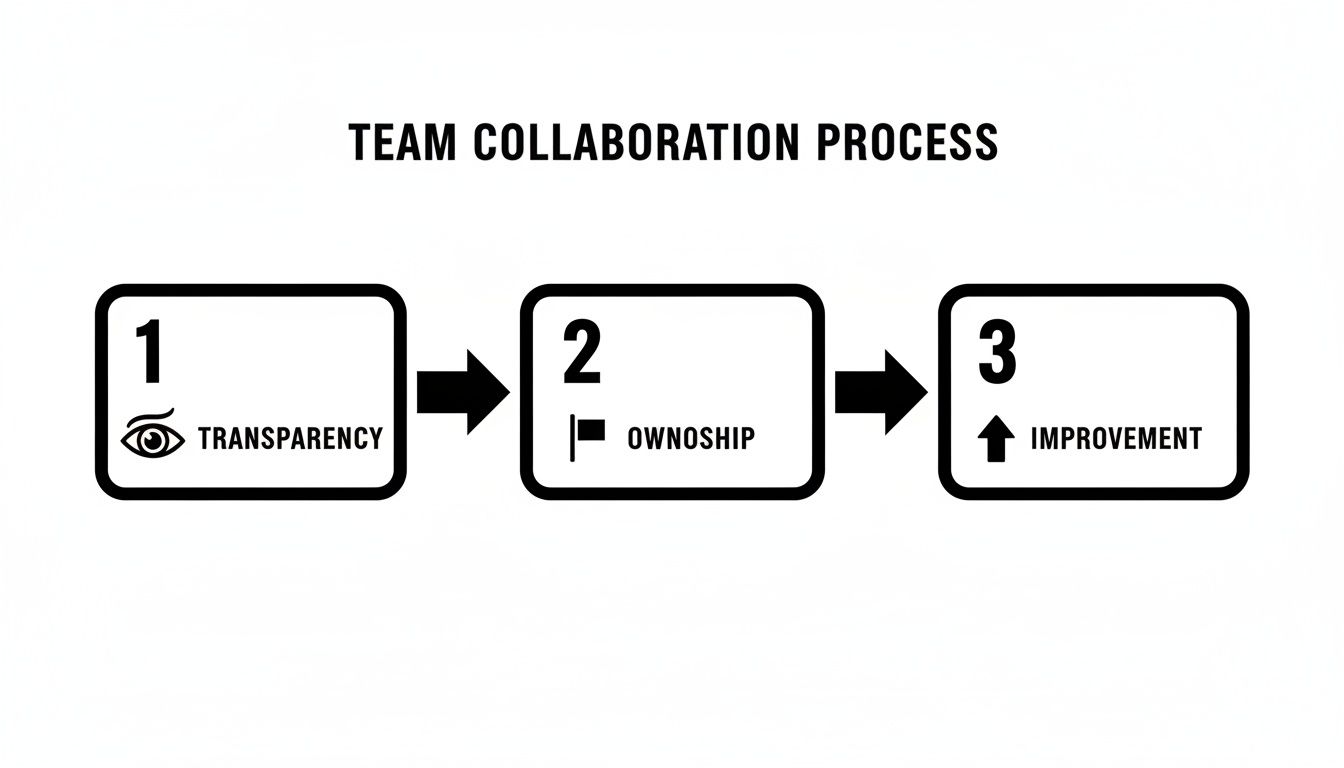
Exceptional software is built by engaged, collaborative teams. While faster delivery and higher quality are significant benefits of agile development, its impact on team dynamics is equally transformative. Agile breaks down the organizational silos and "us vs. them" mentalities that plague traditional projects, fostering a culture of ownership and shared success.
This outcome is by design. Agile is structured for communication. Practices like daily stand-ups, sprint retrospectives, and frequent demos are not just meetings; they are essential touchpoints that build trust, alignment, and transparency. When developers, product managers, and business stakeholders communicate daily, misunderstandings are resolved before they can escalate into major problems.
Empowered Teams Drive Higher Performance
The Waterfall model often involves handing teams a rigid set of instructions with little room for creative input. This top-down approach is a direct path to disengagement and burnout. Agile flips this script by championing empowered, self-organizing teams.
This means trusting your engineers to determine the best way to accomplish the sprint goals. This autonomy is a powerful motivator, instilling a sense of ownership that leads directly to higher engagement, lower turnover, and a more productive environment. For actionable guidance, explore our guide on agile development best practices.
Breaking Down Silos with Continuous Collaboration
Agile ceremonies are designed to ensure everyone is aligned. For example, the Sprint Review is a working session where the development team demonstrates a functional product increment to stakeholders. This isn't a passive status update; it's an interactive forum for real-time feedback.
When business leaders and engineers review working software together every two weeks, the "us vs. them" mentality vanishes. The focus shifts to "our" product and "our" progress, creating a powerful sense of shared accountability.
This transparency eliminates the unwelcome surprises common in long Waterfall projects. Stakeholders remain informed and confident, while the development team receives constant validation that they are building the right solution.
The collaborative power of Agile is why its adoption is expanding beyond software development. While IT remains the largest group of practitioners (63%), its growing use in engineering (48%), operations (29%), and marketing (17%) proves its universal appeal.
The Group107 Model for Amplified Collaboration
This collaborative spirit is even more effective when working with a dedicated team partner. At Group107, our engineers are not just contractors; they become a fully integrated part of your organization. By participating in all your agile ceremonies and communicating directly with your internal teams, they build the deep business context needed for true collaboration. This model ensures your offshore team is a seamless extension of your own, fostering the innovation that only a truly aligned team can produce.
Realizing the Benefits of Agile: A Summary and Next Steps
The benefits of agile development are clear and compelling: faster time-to-market, enhanced product quality, greater flexibility, and improved team morale. By shifting from rigid, long-term planning to an iterative, value-driven approach, organizations can build better products, mitigate risks, and achieve a stronger return on investment.
However, transitioning to Agile requires more than just adopting new terminology. It demands a cultural shift toward transparency, collaboration, and continuous improvement.
Your Actionable Next Steps
To successfully implement Agile and unlock its full potential, follow this structured approach:
- Secure Leadership Buy-In: Ensure executive leadership understands and champions the shift to Agile. Their support is crucial for overcoming cultural resistance and allocating the necessary resources.
- Start with a Pilot Project: Select a single, well-defined project to serve as your first agile initiative. This allows your team to learn the process in a controlled environment before scaling it across the organization.
- Define Your Agile Team and Roles: Assemble a cross-functional team and clearly define key roles, especially the Product Owner and Scrum Master. Ensure the Product Owner is empowered to make prioritization decisions.
- Establish a Prioritized Backlog: Work with stakeholders to create and prioritize an initial product backlog. Focus on delivering the most valuable features first. For guidance, see our article on creating an agile project plan.
- Choose the Right Partner: The fastest way to succeed with Agile is to partner with an experienced firm. Group107 provides dedicated, pre-vetted agile teams and the expert guidance needed to navigate the transition, implement best practices, and drive immediate results.
By taking these deliberate steps, you can transform agile theory into a practical engine for business growth.
Answering Your Questions About Agile Development
Migrating to Agile often raises practical questions. Here, we address the most common concerns from businesses, providing clear, expert answers to demystify the process and highlight how the right partner can ensure a successful transition.
How can Agile work with fixed budgets and deadlines?
This is a frequent and valid concern. Agile excels under fixed constraints by focusing relentlessly on delivering the highest possible value. Instead of attempting to deliver an exhaustive feature list, an agile team prioritizes the backlog to ensure the most critical functionality is shipped within your timeline and budget.
The mindset shifts from "delivering everything on a wishlist" to "delivering what matters most" on time and on budget. This forces disciplined conversations about priorities. New features can be added mid-project, but only by swapping out a lower-priority item to protect the budget and deadline. This keeps you in full control of strategic trade-offs.
Is Agile just for startups and small projects?
No, this is a common myth. While Agile is a natural fit for startups, its principles scale effectively to massive, complex projects, including global financial platforms, large-scale government systems, and enterprise-wide software implementations.
Frameworks like the Scaled Agile Framework (SAFe) are designed specifically for this purpose. They provide the structure needed to coordinate hundreds or even thousands of developers across multiple teams while preserving the core benefits of agile development, proving its versatility for projects of any size.
What is the single biggest challenge in adopting Agile?
The most significant hurdle is almost always cultural, not technical. Agile requires a fundamental shift from rigid, top-down command and control to a culture of transparency, empowerment, and trust. Overcoming this barrier demands strong leadership buy-in and a commitment to open communication.
This is where an experienced partner like Group107 becomes a game-changer. We have guided numerous organizations through this transition, helping them establish the right ceremonies, implement effective tools like Jira, and coach their teams to embrace the collaborative spirit that makes Agile successful.
How does an offshore agile team stay aligned with an in-house team?
Alignment is achieved through a combination of disciplined processes and modern communication tools. At Group107, our offshore teams are not a separate silo; they are fully embedded and integrated into your organization. We use a proven set of practices to ensure everyone operates as a single, cohesive unit:
- Daily Stand-ups: Daily video calls are non-negotiable for keeping everyone synchronized on progress and rapidly resolving roadblocks.
- A Single Source of Truth: We use shared project management tools to provide all team members and stakeholders with complete transparency into the work being done.
- Regular Sprint Reviews: Live demos at the end of each sprint allow stakeholders to see tangible progress and provide immediate, direct feedback.
This structured communication eliminates ambiguity and ensures your teams, regardless of location, are perfectly aligned on the same business goals.