
Finding the right offshore software development partner is a critical business decision, whether you're building a minimum viable product (MVP), scaling an engineering team, or modernizing enterprise systems. The wrong choice leads to missed deadlines, budget overruns, and a subpar product that fails to meet business objectives. This guide provides an expert comparison of the best offshore software development companies to help you make a strategic, results-driven decision.
We've compiled a ranked list of top-tier vendors, each vetted for their specific strengths, industry focus, and ability to deliver tangible business outcomes. Whether you're a SaaS startup needing agile development, a fintech company requiring secure and compliant platforms, or an enterprise implementing complex DevOps and cloud solutions, this list provides a clear path to finding the right partner. For broader context on distributed team models, exploring a list of top remote companies can also be beneficial.
Each company profile below delivers actionable insights, including:
- Core Services: Specializations like dedicated team augmentation, AI/ML integration, and WCAG/ADA accessibility compliance.
- Geographic Focus: Expertise in key talent hubs like Eastern Europe and Latin America.
- Pricing Tiers: General cost structures to aid in initial budget alignment.
- Pros and Cons: A balanced, practical view to match your specific project and business requirements.
This resource is designed as a practical tool to accelerate your vendor selection process. You'll find direct links, clear breakdowns, and specific examples to connect you with a reliable technology partner that drives results.
1. Group 107
Group 107 secures its position as one of the best offshore software development companies by delivering a premium, end-to-end partnership model that goes far beyond simple staff augmentation. The company excels at building fully embedded, non-shared offshore teams from Ukraine that function as a direct extension of a client's organization. This approach ensures complete transparency, robust intellectual property protection, and direct management, allowing startups, product companies, and enterprises to scale engineering capacity quickly and cost-effectively.
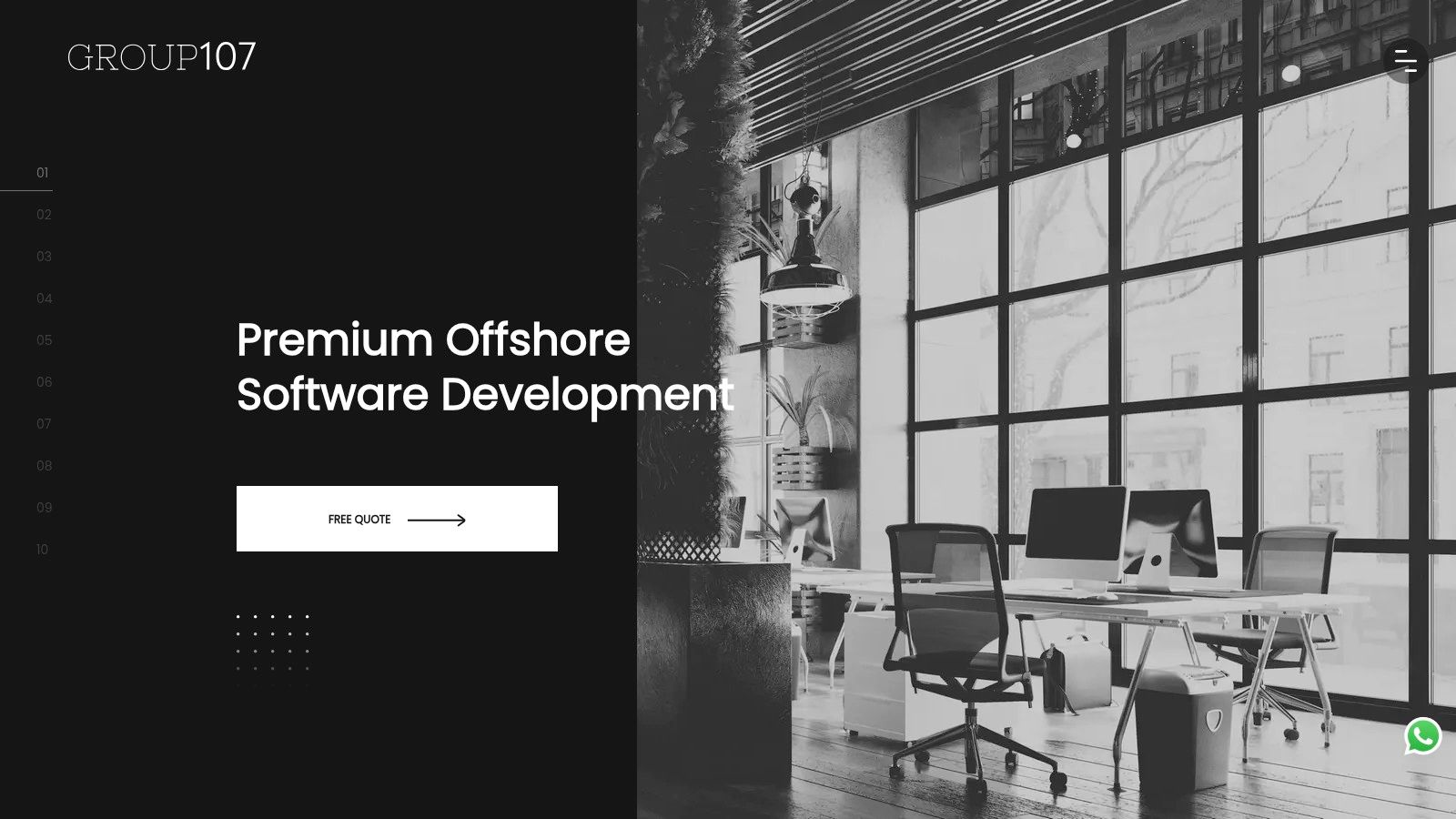
Clients consistently report significant ROI, with labor cost reductions of up to 60% without compromising on quality or speed. The core value proposition is clear: you gain a dedicated team of engineers, data specialists, UI/UX designers, and QA professionals fully committed to your project's success. This integrated structure accelerates time-to-market while maintaining high standards of execution, directly impacting business velocity.
Key Service Offerings & Specializations
What sets Group 107 apart is the breadth and depth of its specialized services, which are designed to deliver measurable business outcomes.
- Dedicated Teams & Team Augmentation: The primary offering is building dedicated, non-shared teams that operate with full transparency. This model is ideal for companies needing to scale development capacity without the overhead of local hiring, ensuring focus and deep project immersion.
- DevOps as a Service: For organizations looking to modernize their infrastructure, Group 107 provides expert DevOps services. This includes streamlining CI/CD pipelines, managing cloud operations, and improving deployment frequency and stability—key drivers of operational efficiency.
- Fintech & Banking Solutions: A specialized division designs and builds secure, user-centric platforms for the financial industry. They address the unique security, compliance (e.g., PCI), and user experience demands of modern fintech applications.
- AI Integrations: The company helps clients integrate artificial intelligence to drive relevant traffic, personalize user experiences, and increase conversions. This practical application of AI focuses on delivering tangible growth metrics and ROI.
- Accessibility Services (WCAG/ADA): Recognizing that inclusive design is a business imperative, Group 107 offers accessibility audits and remediation to ensure digital products comply with WCAG and ADA standards, expanding market reach and mitigating legal risk.
- Startup Program: From discovery and MVP development to a full-scale launch, their startup program provides the technical and strategic support needed to bring new products to market successfully and efficiently.
User Experience and Engagement Model
Engaging with Group 107 begins with a custom scoping process. Instead of a generic rate card, they provide a free, detailed quote based on your specific project requirements. This ensures the proposed solution, team structure, and timeline are precisely aligned with your business goals from day one.
The company's strong social proof, including a 4.7/5 rating from 23 reviews and numerous client testimonials, validates its reputation for skill, responsiveness, and delivering on its cost-saving promises. While the offshore model requires planning for time-zone coordination, Group 107’s established communication and project management processes are designed to ensure seamless collaboration. Understanding the complete benefits of offshore software development can help set clear expectations for a successful partnership.
Website: https://group107.com
| Feature | Description |
|---|---|
| Team Model | Dedicated, non-shared teams embedded in your organization. |
| Core Services | Team Augmentation, DevOps, AI, Fintech, Accessibility, Product Development. |
| Pricing | Custom quote-based; no public rate card. |
| Key Benefit | Up to 60% cost savings on labor with accelerated time-to-market. |
| Social Proof | 4.7/5 rating from 23 reviews; multiple client testimonials. |
Pros:
- Dedicated, non-shared teams ensure focus and strong IP protection.
- Significant cost savings while accelerating project delivery.
- Comprehensive services including DevOps, AI, fintech, and accessibility.
- Strong, verifiable client feedback and a proven track record.
Cons:
- Pricing is not public and requires a custom quote and scoping session.
- Clients must plan for standard offshore logistics like time-zone management.
2. EPAM Systems
Best For: Enterprise-scale product engineering and regulated industries.
EPAM Systems is a global engineering powerhouse known for tackling complex, large-scale digital transformation and product development projects. For organizations that need more than just a development team, EPAM acts as a strategic partner, offering end-to-end delivery that spans from initial strategy to platform modernization and ongoing support.
What sets EPAM apart is its structured approach to enterprise-level challenges, supported by a massive global delivery footprint. With a distributed model across the Americas, EMEA, and APAC, it offers a "follow-the-sun" workflow, ensuring continuous progress on critical projects. This makes it one of the best offshore software development companies for multinational corporations requiring round-the-clock operational capacity.
Core Services & Strengths
EPAM’s offerings are built to support the full product lifecycle. Its consulting arm, EPAM Continuum, helps define strategy and roadmaps, while its engineering teams execute complex builds.
- Enterprise Product Engineering: Excels at building and modernizing large, mission-critical platforms, particularly in regulated sectors like finance and healthcare.
- Cloud & Cybersecurity: Provides deep expertise in cloud migration, infrastructure management, and building secure, resilient systems.
- Data & AI Enablement: Offers advanced capabilities in data engineering, analytics, and implementing GenAI solutions, complete with strategic playbooks.
- SolutionsHub Accelerators: Utilizes a library of pre-built components and solution frameworks to speed up development and reduce time-to-market for common business challenges.
Engagement Model & Pricing
EPAM is structured for significant, multi-squad programs. The company does not publish its pricing or minimum engagement sizes, but its model is best suited for enterprises prepared for a comprehensive procurement process. Startups or companies with small, isolated projects might find the onboarding and scale a poor fit.
Expert Insight: EPAM’s value lies in its extensive knowledge base and established processes. Its repository of case studies, industry reports, and solution accelerators allows enterprise clients to de-risk projects and accelerate the discovery and planning phases significantly, delivering predictable outcomes.
Pros & Cons
| Pros | Cons |
|---|---|
| Proven track record with Fortune 500 companies and in highly regulated industries. | May be over-scaled and too expensive for small projects or early-stage startups. |
| Extensive knowledge assets and accelerators that speed up project discovery and delivery. | The procurement and onboarding process can be complex and lengthy. |
| A global, "follow-the-sun" delivery model ensures continuous development and support. | Minimum engagement sizes typically favor large, multi-squad programs. |
For businesses evaluating how to structure such a large-scale partnership, understanding the fundamentals of engagement is key. This software development outsourcing guide provides a solid framework for preparing your organization for a successful collaboration.
3. SoftServe
Best For: Enterprise-grade cloud, data, and AI/ML solutions with strong consulting oversight.
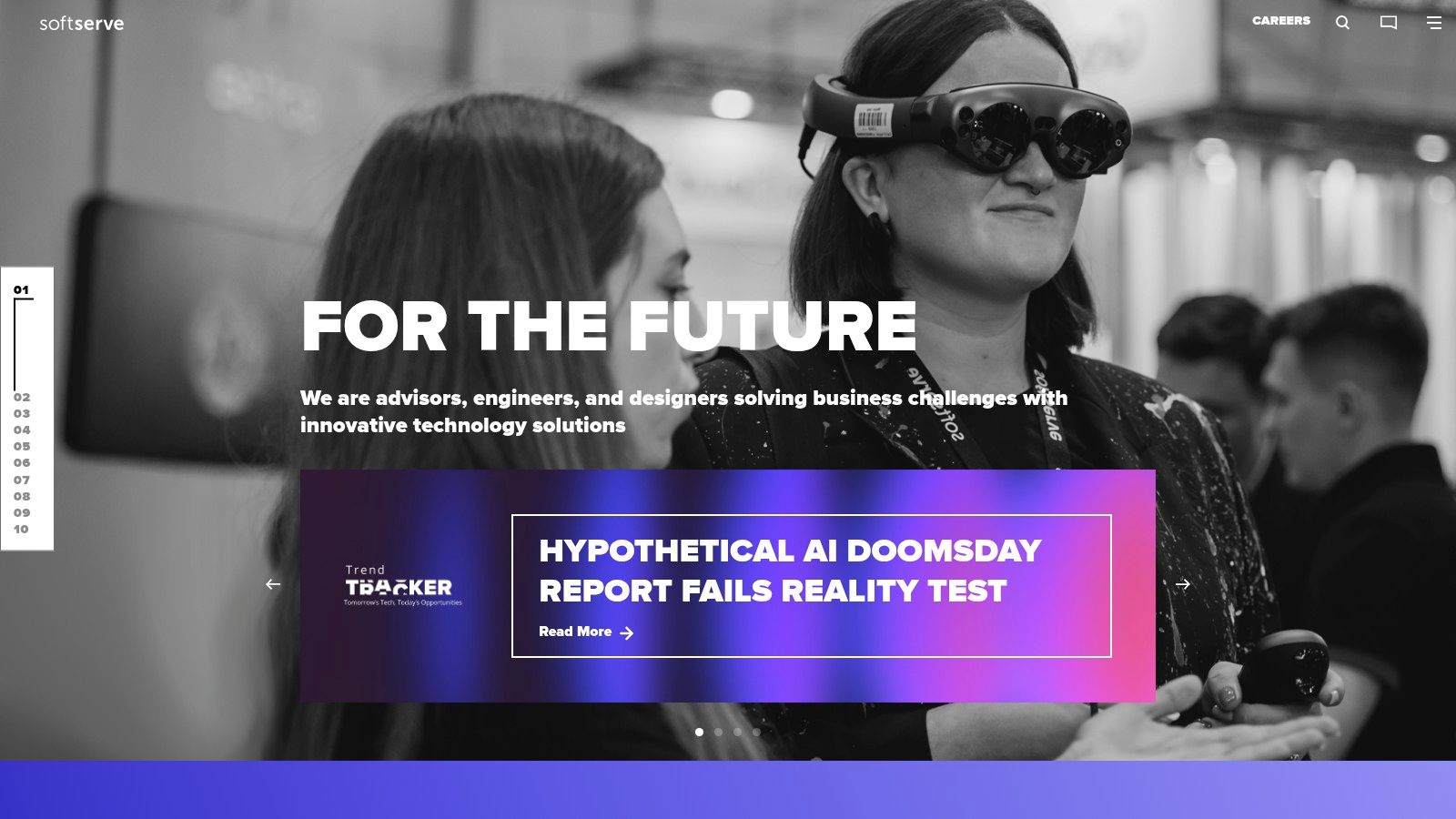
SoftServe is a global software engineering and digital consulting firm that blends advisory services with deep technical execution. With strong roots in Central/Eastern Europe and a significant US presence, it specializes in helping organizations navigate complex modernization initiatives, particularly in cloud adoption, data science, and AI implementation.
The company excels by combining its engineering talent with a mature ecosystem of strategic partnerships, including AWS, Google Cloud, Microsoft, NVIDIA, and Salesforce. This positions SoftServe as one of the best offshore software development companies for businesses that need not only development capacity but also certified expertise in specific third-party technology stacks.
Core Services & Strengths
SoftServe’s portfolio is built to guide clients from initial concept to full-scale implementation and management, with a strong emphasis on industry-specific challenges.
- Cloud & DevOps: Offers end-to-end cloud services, from strategy and migration to FinOps and managed services, helping clients optimize their infrastructure for cost and performance.
- Data & AI/ML: Provides advanced capabilities in data engineering, business intelligence, and building generative AI solutions. Its certified expertise with partners like NVIDIA is a key differentiator.
- Experience Design (XD): A dedicated practice focused on creating intuitive and accessible user experiences, covering everything from user research to service design and UI/UX implementation.
- Industry-Specific Practices: Delivers specialized solutions for healthcare, financial services, retail, and manufacturing, ensuring that engineering outcomes are aligned with business and regulatory needs.
Engagement Model & Pricing
SoftServe is structured to support significant enterprise programs and long-term partnerships. The company's pricing is not publicly available and is typically customized based on the scope, scale, and duration of the engagement. Its model is best suited for mid-market to enterprise-level companies that require a formal procurement process and a strategic, consultative partner.
Expert Insight: SoftServe’s value is magnified through its strategic alliances. Clients gain direct access to certified experts and co-developed solutions built on leading platforms like AWS, Google Cloud, and NVIDIA. This de-risks complex technology adoption and often accelerates time-to-value for AI and cloud projects.
Pros & Cons
| Pros | Cons |
|---|---|
| Strong cloud and AI credentials backed by strategic partnerships with major tech vendors. | Enterprise focus can mean higher minimum commitments and more formal processes. |
| US-facing operations with a proven track record of successful enterprise delivery. | Limited public visibility into pricing for smaller projects or fixed-bid engagements. |
| Integrates advisory, design, and engineering into a single, cohesive offering. | May be less agile for startups needing rapid, small-scale team augmentation. |
For organizations looking to build and manage a distributed engineering team, understanding the different models is critical. Getting familiar with the essentials of managing offshore software development teams will provide a strong foundation for a successful partnership.
4. Globant
Best For: AI-powered digital product engineering and enterprise platform integration.
Globant is a digital engineering firm with strong roots in Latin America that has grown into a major global player. It focuses on creating intelligent digital products and platforms by blending engineering, design, and strategy. For organizations looking to accelerate their development lifecycle with artificial intelligence, Globant presents a compelling model.
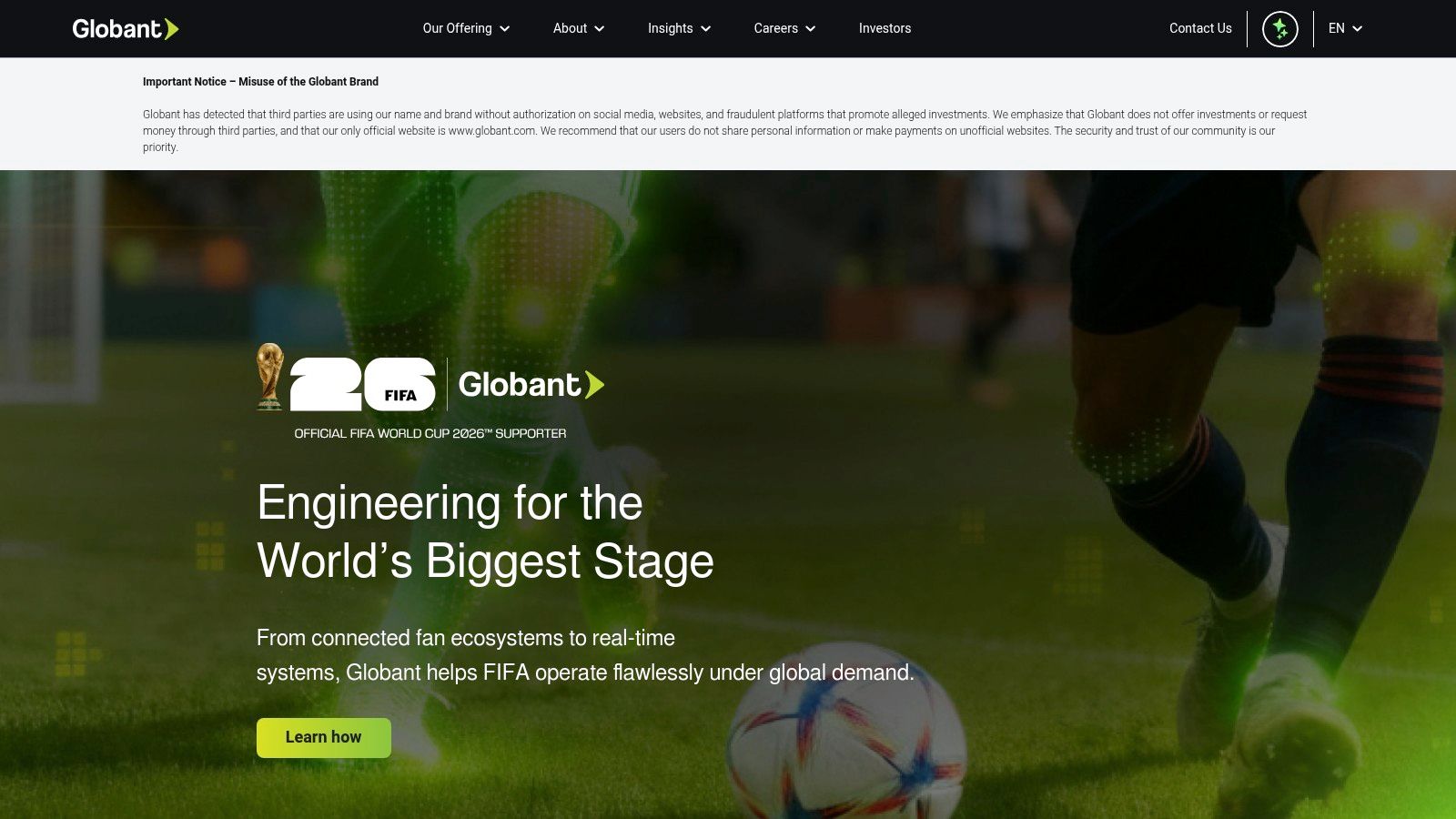
What makes Globant stand out is its aggressive integration of AI into its own delivery processes. With offerings like AI Pods and its proprietary suite of AI agents, the company aims to boost productivity across the entire software development lifecycle (SDLC). This commitment to AI-native delivery makes it one of the best offshore software development companies for businesses that want a partner at the forefront of development automation and efficiency.
Core Services & Strengths
Globant organizes its expertise into "Studios," which are deep centers of excellence for specific capabilities. This structure allows clients to access specialized talent for each stage of their project.
- AI-Powered Software Development: Utilizes AI agents and specialized AI teams to automate tasks, generate code, and accelerate testing, directly impacting project timelines and costs.
- Enterprise Platform Services: Holds strong competencies in integrating and customizing major enterprise platforms, including SAP, Salesforce, and the major cloud providers (AWS, Microsoft, Google).
- End-to-End Product Engineering: Covers the full journey from initial business strategy and customer experience design to scalable engineering and platform evolution.
- Global Delivery Network: With a presence in over 35 countries, it offers flexible nearshore and offshore engagement models tailored to client time zones and budget requirements.
Engagement Model & Pricing
Globant is positioned for mid-market and enterprise clients seeking a strategic digital partner. The company does not publicly list its pricing or engagement minimums, but its scale and brand recognition suggest a premium. Its model is best suited for substantial projects rather than small, one-off tasks. The emphasis on enterprise-grade governance and process may feel rigid to smaller, more agile startups.
Expert Insight: Globant’s AI-first approach is more than a service offering; it’s a core part of its delivery DNA. Its suite of proprietary AI tools and agents gives clients a direct look into the future of software development, where AI augments human teams to deliver faster and more efficiently.
Pros & Cons
| Pros | Cons |
|---|---|
| A recognized leader in digital engineering with a portfolio of marquee US and global clients. | The brand premium and scale may result in higher costs and engagement minimums. |
| Strong integration capabilities with major enterprise platforms like SAP, Salesforce, and AWS. | Heavier governance on large programs can reduce flexibility for quick-pivot projects. |
| AI-powered delivery model and tools provide a distinct efficiency advantage. | May be over-resourced for startups or companies needing a small, dedicated team. |
To get the most out of a partnership with a large-scale provider like Globant, it's vital to have your internal processes aligned. Our guide to DevOps and CI/CD best practices can help prepare your organization's technical foundation for such a collaboration.
5. Endava
Best For: Nearshore collaboration and enterprise-grade digital evolution.
Endava is a UK-headquartered software engineering firm that excels in bridging the gap between US-based clients and top-tier global talent. Specializing in what it terms "digital evolution," Endava partners with organizations to modernize core systems, replatform legacy applications, and build next-generation products, with a strong focus on nearshore delivery from Latin America and Eastern Europe.
What makes Endava a unique choice is its strategic blend of geographical proximity and enterprise-level governance. As a publicly traded company (NYSE: DAVA), it offers a degree of transparency and operational maturity that de-risks large-scale projects. For US companies, its strong presence in Latin America provides significant time-zone overlap, which greatly improves the speed of agile collaboration and decision-making. This positions it as one of the best offshore software development companies for businesses prioritizing real-time communication.
Core Services & Strengths
Endava’s service model is built around co-creating solutions with clients, from initial strategy through to long-term management. They focus on delivering tangible business outcomes, not just code.
- Digital Evolution & Modernization: Excels at replatforming critical systems in sectors like financial services, payments, and retail, helping companies move from outdated architectures to modern, scalable solutions.
- Nearshore & Offshore Delivery: Operates robust delivery centers in Latin America and Central/Eastern Europe, enabling a flexible mix of cost-effective offshore work and high-collaboration nearshore teams.
- AI-Native Engineering: Integrates artificial intelligence and machine learning principles directly into the software development lifecycle, moving beyond siloed AI projects to build intelligent systems from the ground up.
- Payments & Financial Services Expertise: Possesses deep domain knowledge in the payments ecosystem, helping clients build secure, compliant, and high-performance financial technology platforms.
Engagement Model & Pricing
Endava is structured for long-term, multi-squad partnerships and does not publish its rate cards publicly. Its engagement model is best suited for mid-market and enterprise clients ready to invest in a strategic, ongoing program of work. The process often begins with a discovery and roadmapping phase to ensure alignment before full-scale development kicks off. This initial investment in planning can be a poor fit for companies needing to launch a very small, isolated project quickly.
Expert Insight: Endava’s nearshore model offers a compelling middle ground. It combines the cost benefits of offshore development with the collaborative advantages of having a team in a similar time zone. This is particularly effective for agile teams that rely on daily stand-ups, quick feedback loops, and close stakeholder involvement.
Pros & Cons
| Pros | Cons |
|---|---|
| Strong nearshore presence in Latin America offers superior time-zone alignment for US clients. | Prioritizes larger, multi-squad programs over very small or single-squad projects. |
| Publicly listed company, providing enterprise-grade governance, security, and transparency. | The initial discovery and compliance steps can add lead time before project kickoff. |
| Deep experience in modernizing mission-critical systems, especially in finance and payments. | May not be the most cost-effective option for startups with minimal funding. |
For organizations looking to build high-performing engineering teams, understanding different staffing approaches is crucial. This IT staff augmentation guide offers valuable insights into structuring a team for success, whether nearshore or offshore.
6. DataArt
Best For: Custom software delivery with integrated data and AI advisory.
DataArt is a global software engineering firm that combines technical delivery with strategic consulting. It operates on a "people-first" principle, focusing on building flexible, long-term partnerships. With a significant client-facing presence in the US and distributed engineering teams across multiple regions, DataArt offers a balanced approach for companies that need both hands-on development and expert guidance on data and AI initiatives.
What makes DataArt a standout choice is its dual focus on engineering execution and business-aligned advisory. It is recognized in analyst research, such as receiving honorable mentions from Gartner for custom software development services, which adds a layer of credibility for enterprise stakeholders. This makes it one of the best offshore software development companies for organizations seeking a partner that understands complex industry-specific challenges in finance, healthcare, and travel.
Core Services & Strengths
DataArt's service portfolio is designed to be adaptable, catering to both well-defined product roadmaps and emerging business needs. The company provides cross-functional teams that integrate seamlessly into a client's existing operations.
- Custom Software & Product Development: Delivers end-to-end custom software, from initial ideation and prototyping to deployment and maintenance, with a strong emphasis on scalable architecture.
- Data, AI & ML Consulting: Offers specialized advisory services to help organizations define their data strategy, build robust data platforms, and implement practical AI and machine learning solutions.
- Industry-Specific Solutions: Possesses deep domain knowledge in regulated and complex sectors like financial services (fintech, wealth management), healthcare (HIPAA compliance), and travel technology.
- Cloud & DevOps: Provides expertise in cloud infrastructure modernization, CI/CD pipeline automation, and building secure, resilient cloud-native applications.
Engagement Model & Pricing
DataArt’s engagement model is built on flexibility, offering various team compositions from dedicated teams to project-based work. The company does not publish its rate cards, and pricing is determined after a detailed scoping process. This model is well-suited for businesses with a clear roadmap but may be less ideal for organizations looking for quick, ad hoc experimental work without a defined scope.
Expert Insight: DataArt’s strength is its combination of engineering talent and consultative depth. Clients gain not just a development team but a strategic partner that can provide actionable advice on technology choices and data strategy, which is particularly valuable in fast-moving industries like fintech and media.
Pros & Cons
| Pros | Cons |
|---|---|
| Balanced portfolio of advisory and engineering with flexible team compositions. | Rate cards are not public; estimation requires a detailed scoping process. |
| Positive recognition in industry reports lends credibility for enterprise buyers. | Project intake may prioritize clearly defined roadmaps over ad hoc experiments. |
| Deep domain expertise in finance, healthcare, travel, and other complex sectors. | May not be the cheapest option for startups purely focused on minimizing cost. |
For organizations ready to engage with a partner of this caliber, having a structured approach is essential. This software development lifecycle guide can help you align your internal processes for a successful collaboration.
7. Intellias
Best For: Product-centric companies in specialized sectors like automotive and mobility.
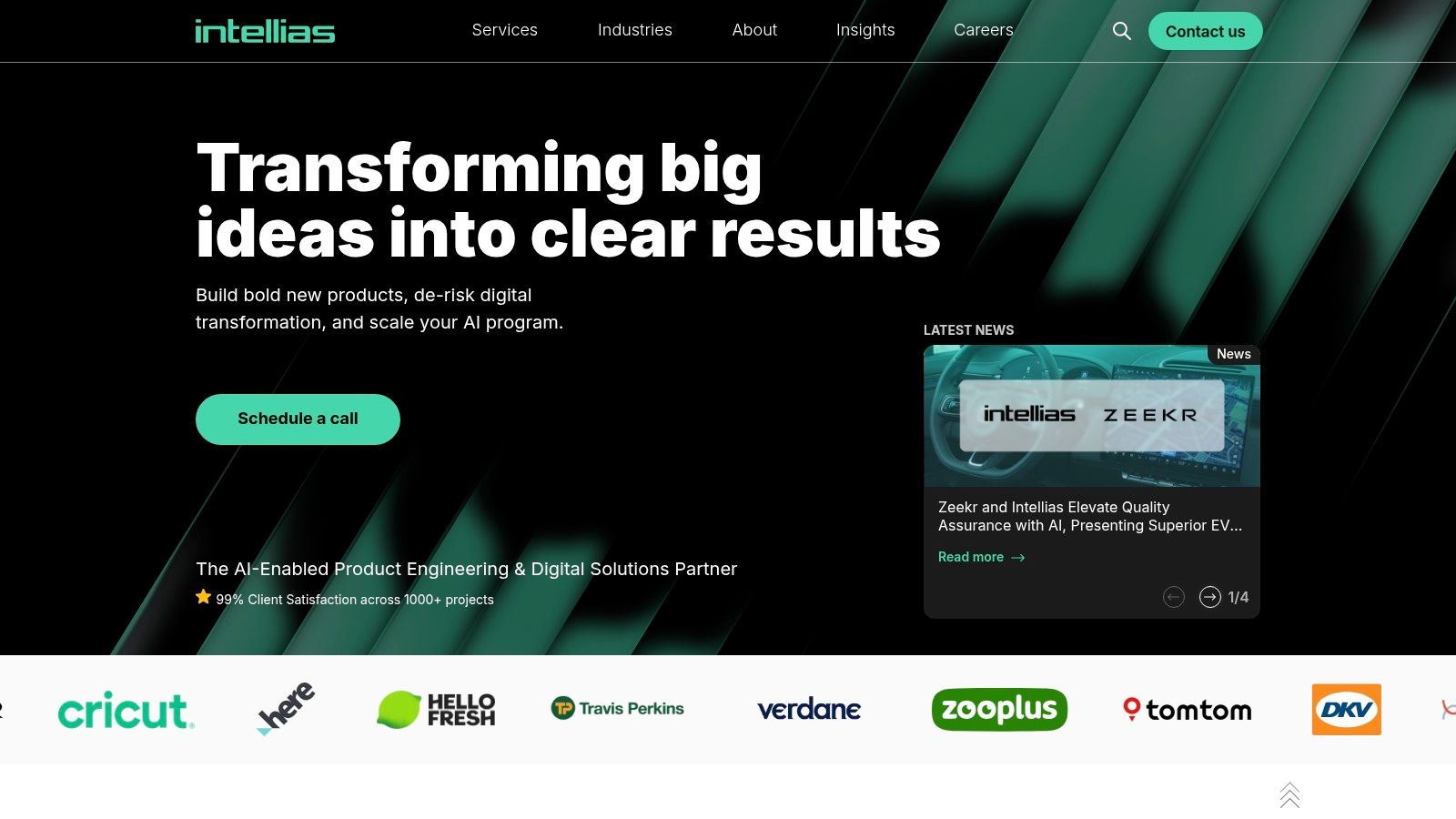
Intellias is a global technology partner that combines deep engineering expertise with a strategic, product-oriented mindset. With a strong presence in Central and Eastern Europe, the company delivers full-cycle software development, platform engineering, and digital consulting for clients who need more than just code; they need a partner to build, scale, and maintain complex digital products.
What distinguishes Intellias is its focused industry depth, especially in automotive, fintech, and telecom. It goes beyond general software services to provide specialized solutions for software-defined vehicles (SDV), real-time data platforms, and financial systems. This makes Intellias one of the best offshore software development companies for businesses operating in markets with high technical barriers and specific regulatory demands.
Core Services & Strengths
Intellias structures its offerings to support the complete product journey, from initial concept and design through development, deployment, and operational excellence. Its award-winning design studio and advisory services complement its core engineering capabilities.
- Product Engineering: Excels in building and scaling digital products, particularly within the automotive sector, focusing on SDV, over-the-air (OTA) updates, and in-vehicle infotainment systems.
- SRE & DevOps: Provides mature Site Reliability Engineering and DevOps practices designed to build scalable, resilient infrastructure and automate CI/CD pipelines for reliable product delivery.
- Digital Consulting & Design: Offers strategic guidance and user-centric design services to ensure the final product meets both business goals and end-user expectations.
- Technology Agnostic Approach: Maintains expertise across major cloud platforms (AWS, Azure, GCP), programming languages, and frameworks, allowing it to select the right stack for each unique challenge rather than forcing a specific technology.
Engagement Model & Pricing
Intellias is geared toward long-term partnerships and sustained product development programs. The company does not publicly list its pricing or minimum project sizes, indicating a preference for customized engagements based on scope and scale. Its model is ideal for companies looking to establish dedicated teams for continuous product innovation.
Expert Insight: Intellias’s value is most apparent in its specialized knowledge of the automotive and mobility industries. Its expertise in building software for connected cars and real-time data processing allows clients to accelerate development in a technically demanding and rapidly changing field.
Pros & Cons
| Pros | Cons |
|---|---|
| Deep engineering expertise in complex, specialized industries like automotive, fintech, and telecom. | May not be the best fit for very short, MVP-only projects with no long-term roadmap. |
| Strong, clearly defined SRE and DevOps practices that help clients scale products reliably. | Publicly available pricing information is limited, requiring direct engagement for quotes. |
| A full-service model that includes strategy, design, and engineering under one roof. | The focus on complex industries might make it less ideal for simpler web or mobile apps. |
Building a reliable product requires a solid foundation. This SRE & DevOps guide explains how to implement the principles Intellias champions to ensure your software remains stable and scalable.
Comparison of Top 7 Offshore Software Development Companies
| Company | Implementation complexity | Resource requirements | Expected outcomes | Ideal use cases | Key advantages |
|---|---|---|---|---|---|
| Group 107 | Moderate — requires onboarding and scoping for embedded teams | Dedicated, non-shared offshore teams (eng, data, design, QA, marketing); custom engagement | Faster time‑to‑market, measurable product growth, up to ~60% labor cost savings (reported) | Startups, product companies, fintech MVP→growth with dedicated teams | Non‑shared teams with strong IP protection, outcome‑focused services, compliance-minded |
| EPAM Systems | High — enterprise procurement and multi‑squad governance | Large distributed teams across Americas/EMEA/APAC; accelerators and playbooks | Complex product engineering and platform modernization at enterprise scale | Large enterprises, regulated industries, large-scale transformations | Global follow‑the‑sun delivery, deep cloud/cyber/GenAI expertise, extensive knowledge assets |
| SoftServe | Moderate–High — formal processes suited to enterprise clients | Full‑stack teams plus advisory; partnerships with AWS/GCP/Azure/NVIDIA/Salesforce | Cloud/AI‑enabled products and enterprise‑grade delivery | Enterprises needing cloud, AI, or industry-specific solutions (healthcare, finance, retail) | Strong cloud/AI partnerships and US‑facing enterprise delivery experience |
| Globant | High — heavier governance and change control for large programs | Large global delivery network, AI delivery accelerators (CODA, AI Pods) | Accelerated SDLC productivity, AI‑native delivery and platform integrations | Large digital transformations, platform integrations, AI‑native initiatives | Recognized digital engineering brand, strong platform integration and AI accelerators |
| Endava | Moderate–High — discovery and compliance add lead time | Nearshore/offshore agile teams with AI‑native engineering practices | Modernized core systems, improved collaboration and operational governance | Replatforming, core modernization, mission‑critical systems with US teams | Nearshore time‑zone overlap, strong modernization experience, public company transparency |
| DataArt | Moderate — requires scoping and clear roadmaps | Flexible engineering and data/AI consulting teams; US sales/support presence | Custom products and data platforms guided by advisory input | Custom product development and data/AI initiatives across industries | Balanced advisory + engineering, analyst recognition, flexible team compositions |
| Intellias | Moderate — best for sustained product development | Full‑cycle engineering, SRE/DevOps, design studio; industry‑specialized teams | Reliable, scalable products with strong SRE/DevOps support | Automotive (SDV), fintech, telecom, long‑term product engineering | Deep engineering depth in specialized industries, clear SRE/DevOps practices, tech‑agnostic approach |
Navigating Your Path to a Successful Offshore Partnership
Choosing from the best offshore software development companies is more than just picking a vendor; it's about selecting a strategic partner to drive your business forward. The companies detailed in this guide, from industry giants like EPAM and SoftServe to specialized experts like Group 107, represent the top tier of global talent. Each offers a unique blend of technical skill, industry focus, and operational maturity, ready to meet the complex demands of modern businesses.
The core takeaway is that the "best" partner is entirely dependent on your specific context. A fintech startup requires a partner with deep regulatory knowledge and security expertise, while an enterprise focused on modernization needs a team proficient in DevOps and cloud migration. Your decision should be guided by a clear understanding of your project scope, technical requirements, and long-term business goals.
Key Factors for Making Your Final Decision
As you move from evaluation to selection, refocus on the criteria that matter most for a successful, long-term engagement. Beyond the glossy brochures and sales pitches, the true value of an offshore partner is revealed in their processes, communication, and commitment to your success.
Consider these critical factors:
- Cultural and Methodological Fit: Does the company’s development methodology (e.g., Agile, Scrum, SAFe) align with your internal processes? A mismatch here can create significant friction and slow down progress.
- Communication and Transparency: Look for partners that prioritize clear, consistent communication. This includes regular status updates, direct access to the development team, and transparent reporting on progress and roadblocks.
- Scalability and Flexibility: Your needs will change. The right partner should be able to scale your team up or down, pivot to new technologies, and adapt to evolving project requirements without causing major disruptions.
- Security and Compliance: For businesses in regulated industries like fintech or healthcare, this is non-negotiable. Scrutinize the company's security protocols, data protection policies, and compliance certifications (e.g., ISO 27001, SOC 2, HIPAA).
Expert Insight: The most successful offshore partnerships are built on a foundation of mutual trust and shared objectives. Treat your offshore team as an extension of your in-house staff, not just a contracted resource. Invest in building relationships and integrating them into your company culture.
Actionable Next Steps to Secure Your Partner
With a shortlist of potential partners, it's time to take decisive action. The goal is to gather the specific, detailed information needed to make a confident choice.
- Initiate Discovery Calls: Schedule calls with your top 2-3 choices. Come prepared with a detailed list of questions about their experience, processes, and team structure.
- Request a Technical Deep Dive: Ask for an opportunity to speak with their senior engineers or solution architects. This is your chance to vet their technical expertise and see if they truly understand your challenges.
- Check References and Case Studies: Go beyond the provided case studies. Ask for references from clients with projects similar to yours in scope and complexity.
- Run a Small Pilot Project: If feasible, proposing a small, paid pilot project or a proof-of-concept is the ultimate test. It allows you to evaluate their technical skills, communication, and project management in a real-world setting before committing to a long-term contract.
Finding the right offshore development partner is a critical step toward accelerating your product roadmap, modernizing your technology stack, and achieving your strategic objectives. By conducting thorough due diligence and focusing on the factors that drive successful partnerships, you can confidently select one of the best offshore software development companies to help you build, innovate, and scale.
Ready to partner with a dedicated team that combines deep engineering expertise with a strategic, business-first approach? Group 107 specializes in building secure, scalable, and high-performance software for fintech, SaaS, and enterprise clients. Let’s discuss how our offshore development teams can help you achieve your goals.