In a competitive market, speed, reliability, and security are non-negotiable. Traditional development cycles are often too slow, and managing complex cloud infrastructure in-house can drain critical resources away from core product innovation. This is where DevOps as a Service (DaaS) fundamentally transforms operations. It’s not just about outsourcing tasks; it’s about embedding a culture of continuous integration, delivery, and improvement directly into your organization without the steep hiring and training curve.
For businesses in SaaS, finance, and enterprise technology, leveraging the right DevOps as a service providers means achieving faster time-to-market, building resilient and secure infrastructure, and gaining predictable operational costs. This strategic shift allows your teams to focus on creating value for customers instead of managing deployment pipelines and server configurations. The business impact is clear: increased efficiency, better scalability, and a significant return on investment.
This guide cuts through the noise. We have curated a detailed list of the 12 best providers, marketplaces, and talent platforms to help you select the ideal partner to build, deploy, and manage your applications at scale. For each option, we provide a concise analysis of their core offerings, identify their ideal customer profile—from startups to enterprises—and highlight practical limitations to inform your decision. You will find direct links and screenshots for each entry, enabling you to quickly evaluate and connect with the right DaaS partner for your specific business needs. This resource is designed to help you make a confident, strategic choice that accelerates your growth and enhances your operational excellence.
1. Group 107
Group 107 positions itself as a premium technology partner, delivering a comprehensive and integrated approach to DevOps as a Service. Rather than offering piecemeal solutions, they embed dedicated, senior-level offshore engineering teams directly into client organizations. This model is engineered for deep collaboration and long-term strategic alignment, making them a standout choice for businesses that require more than just a vendor—they need a true partner to scale their infrastructure and accelerate product delivery.
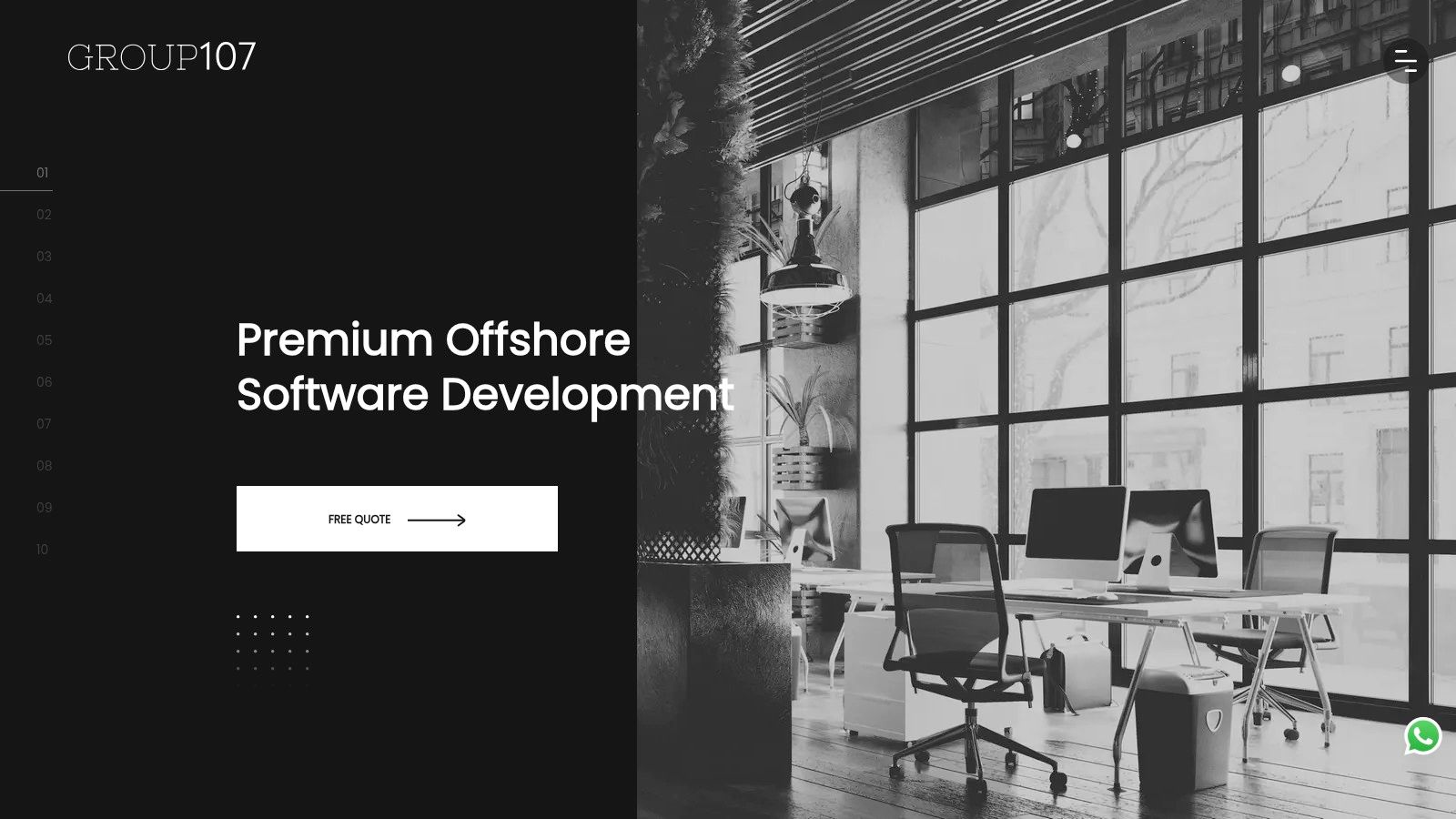
What truly differentiates Group 107 is its holistic service model. Their expertise extends beyond conventional CI/CD pipeline automation and cloud management. They integrate DevOps principles across the entire product lifecycle, from initial discovery and MVP development to ongoing optimization and growth marketing. This end-to-end capability ensures that infrastructure decisions are always aligned with business objectives, fostering a culture of efficiency and continuous improvement. Their impressive 4.7/5 average rating from client reviews frequently highlights the team's responsiveness, technical skill, and ability to seamlessly integrate with in-house teams.
Core Strengths and Target Audience
- Best For: Startups, product companies, and financial institutions that need a dedicated, non-shared team to build and scale their operations with full transparency and IP protection.
- Key Advantage: The dedicated team model offers significant cost efficiencies, with clients often realizing up to 60% savings on labor costs compared to onshore hiring, without sacrificing quality or control.
- Specialized Expertise: Beyond core DevOps, they offer high-impact services in AI integration, Fintech platform development, and digital accessibility, providing a multifaceted partnership.
- Pricing: Pricing is customized based on project scope and team composition. Prospective clients must contact them for a detailed quote, as no public rates are available.
For organizations new to the concept, understanding the foundational principles is key; this guide on what DevOps is and why you need it provides excellent context. While the lack of public pricing requires an initial consultation, it reflects their commitment to building tailored, high-value solutions rather than offering a one-size-fits-all service.
2. AWS Marketplace (Devops Services and Consulting)
For organizations deeply integrated into the Amazon Web Services ecosystem, the AWS Marketplace is less a traditional provider and more a strategic procurement hub. It functions as a vetted, centralized catalog of third-party DevOps consulting services and managed offerings that can be billed directly to an existing AWS account. This streamlined process eliminates the friction of onboarding new vendors, making it a powerful tool for enterprise procurement teams.
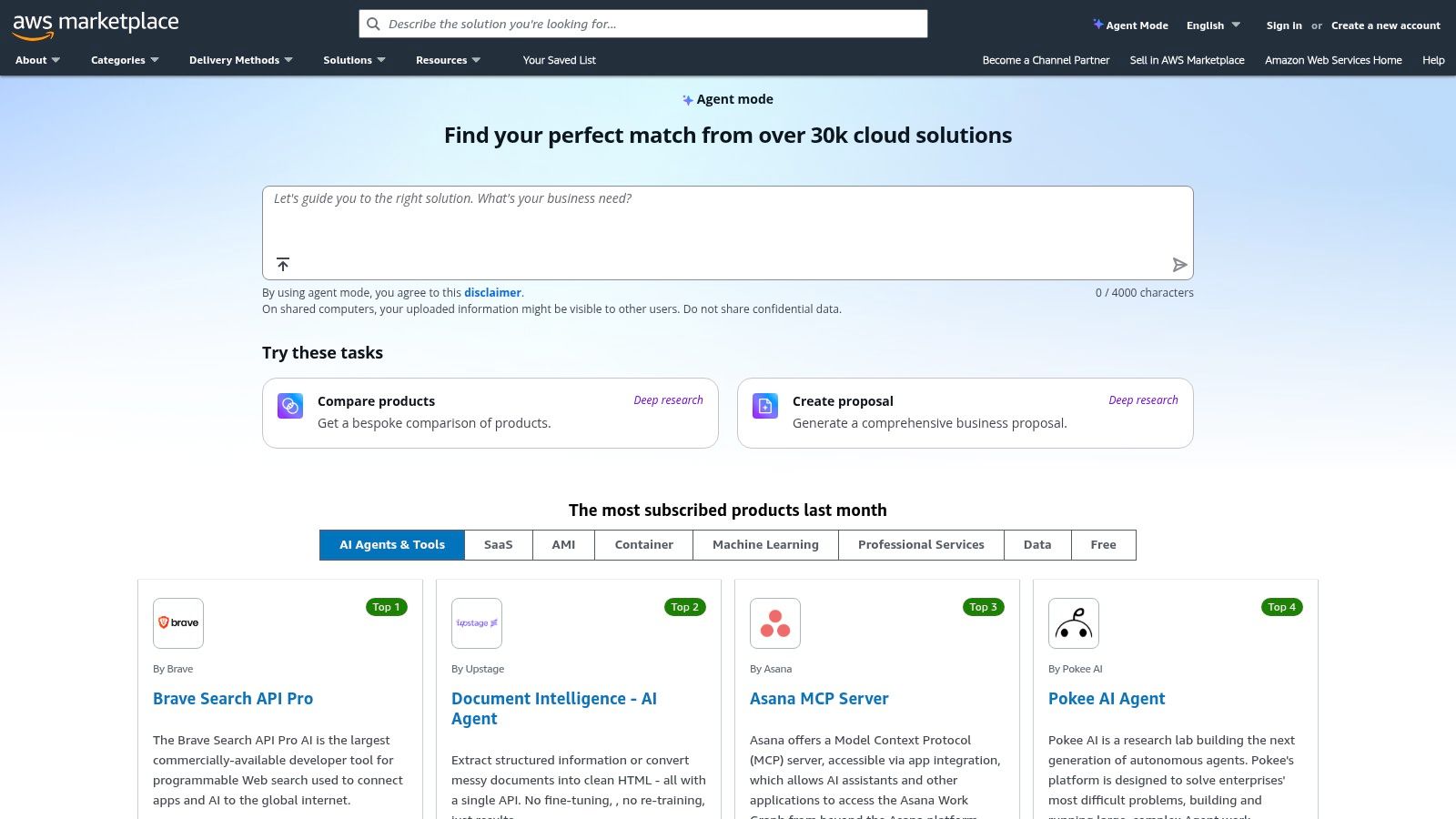
The primary advantage is procurement and billing consolidation. Instead of managing separate contracts, invoices, and payment cycles, companies can transact for DevOps services from certified AWS partners through their master AWS account. This is particularly valuable for larger organizations that have already negotiated Enterprise Discount Programs (EDPs) with AWS, as marketplace spending often counts toward their commitment.
Core Offerings and Use Cases
The marketplace isn't a single provider but a portal to many. You can find a wide array of DevOps as a Service providers specializing in niche areas:
- Managed CI/CD: Engage a partner to build, manage, and optimize your entire CI/CD pipeline using AWS native tools like CodePipeline, CodeBuild, and CodeDeploy.
- Infrastructure as Code (IaC) Implementation: Find consultants to help you provision and manage your infrastructure with Terraform, CloudFormation, or the AWS CDK.
- SRE and Cloud Operations: Contract a team for 24/7 monitoring, incident response, and performance optimization directly within your AWS environment.
Pricing and Engagement Model
Most professional service listings on the AWS Marketplace operate on a "Private Offer" basis. Public pricing is rare; instead, you find a vendor, discuss your requirements, and receive a custom Statement of Work (SOW) and pricing. This model supports complex, tailored engagements but requires more upfront communication than off-the-shelf products. The platform’s inherent focus on a single cloud vendor makes it less suitable for multi-cloud strategies, a key consideration when comparing public cloud options like AWS vs. Azure for enterprise workloads.
Website: https://aws.amazon.com/marketplace/
3. Microsoft Azure Marketplace / AppSource (Consulting Services – DevOps)
For companies committed to the Microsoft cloud ecosystem, the Azure Marketplace and AppSource serve as a central hub for procuring DevOps services directly from vetted partners. Similar to its AWS counterpart, this platform streamlines the vendor discovery and contracting process by integrating it with an existing Microsoft account. This approach simplifies billing and leverages established enterprise agreements, making it an efficient choice for organizations already invested in Azure.
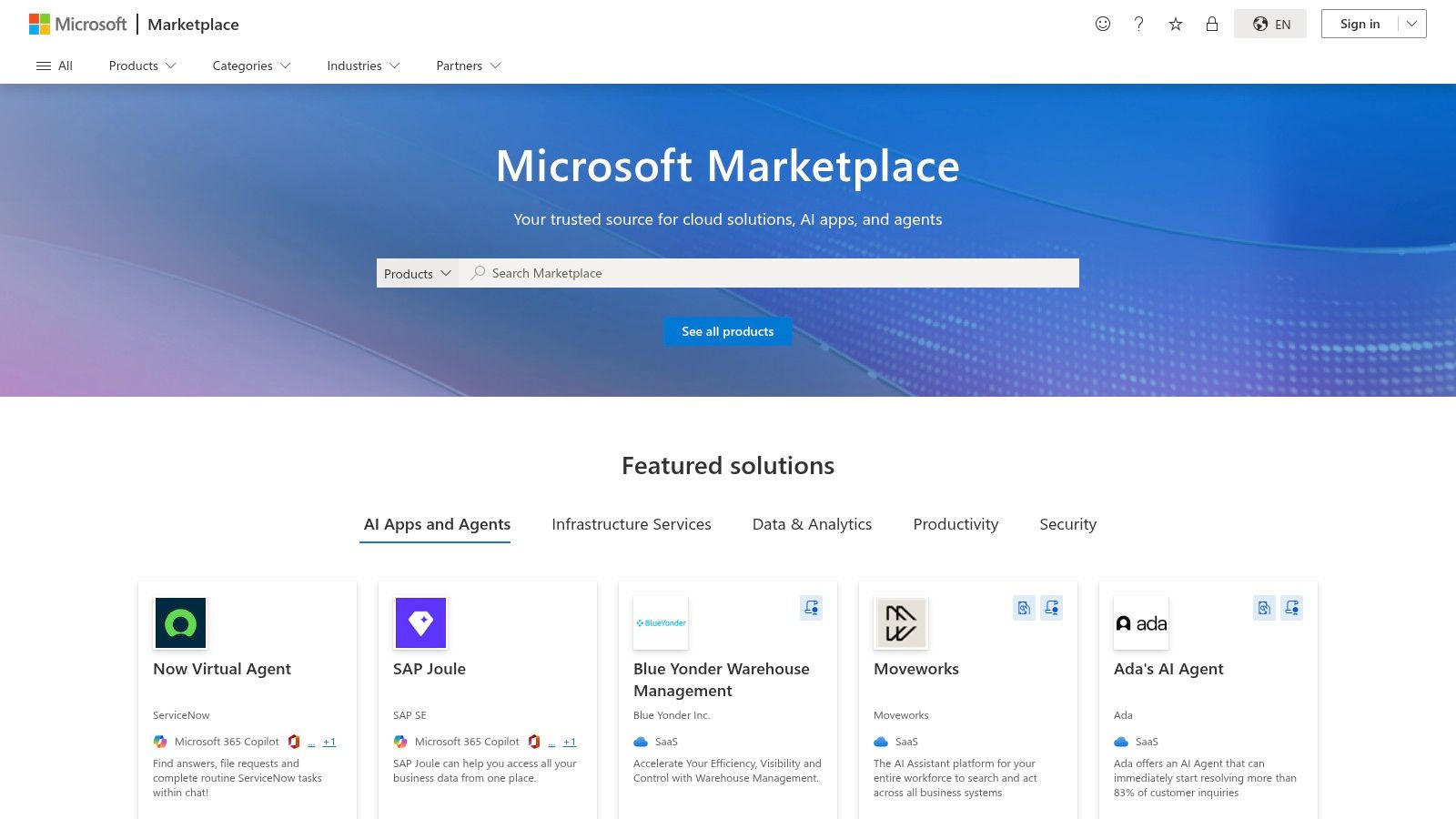
The key benefit is its deep integration with the Azure and GitHub ecosystems. Partners listed often have certified specializations in Azure DevOps, GitHub Actions, and related security services. This ensures that the expertise you engage is aligned with Microsoft's best practices and toolchains, reducing the learning curve and accelerating project delivery for Azure-native environments.
Core Offerings and Use Cases
The marketplace features a diverse range of DevOps as a Service providers offering packaged and custom solutions. You can find pre-defined engagements tailored for common needs:
- Azure DevOps Assessments: Engage a partner for a fixed-scope review of your current practices, resulting in a roadmap for improvement.
- Packaged Implementations: Find consultants offering 4-8 week implementation packages for setting up CI/CD pipelines, IaC with Bicep or Terraform, and security scanning.
- Proof of Concepts (PoCs): Contract a team to build a targeted PoC to validate a new DevOps strategy or toolchain within your Azure environment.
Pricing and Engagement Model
The model varies, but a notable advantage is that many listings show fixed starting prices for introductory packages like assessments or PoCs. This transparency helps with initial budgeting. For more complex needs, the process moves to a custom quote and Statement of Work (SOW). A practical tip is to use the geographic and industry filters to narrow down the extensive list of global partners, as the quality and focus can vary significantly between vendors.
Website: https://azuremarketplace.microsoft.com/
4. Google Cloud Marketplace (Professional Services)
For teams committed to the Google Cloud Platform (GCP) ecosystem, the Google Cloud Marketplace serves a similar function to its AWS counterpart: a centralized hub for discovering and procuring third-party professional services. It allows organizations to find vetted partners and engage them for DevOps and cloud engineering needs, with the significant advantage of consolidated billing through their existing GCP account. This removes procurement hurdles and simplifies vendor management.
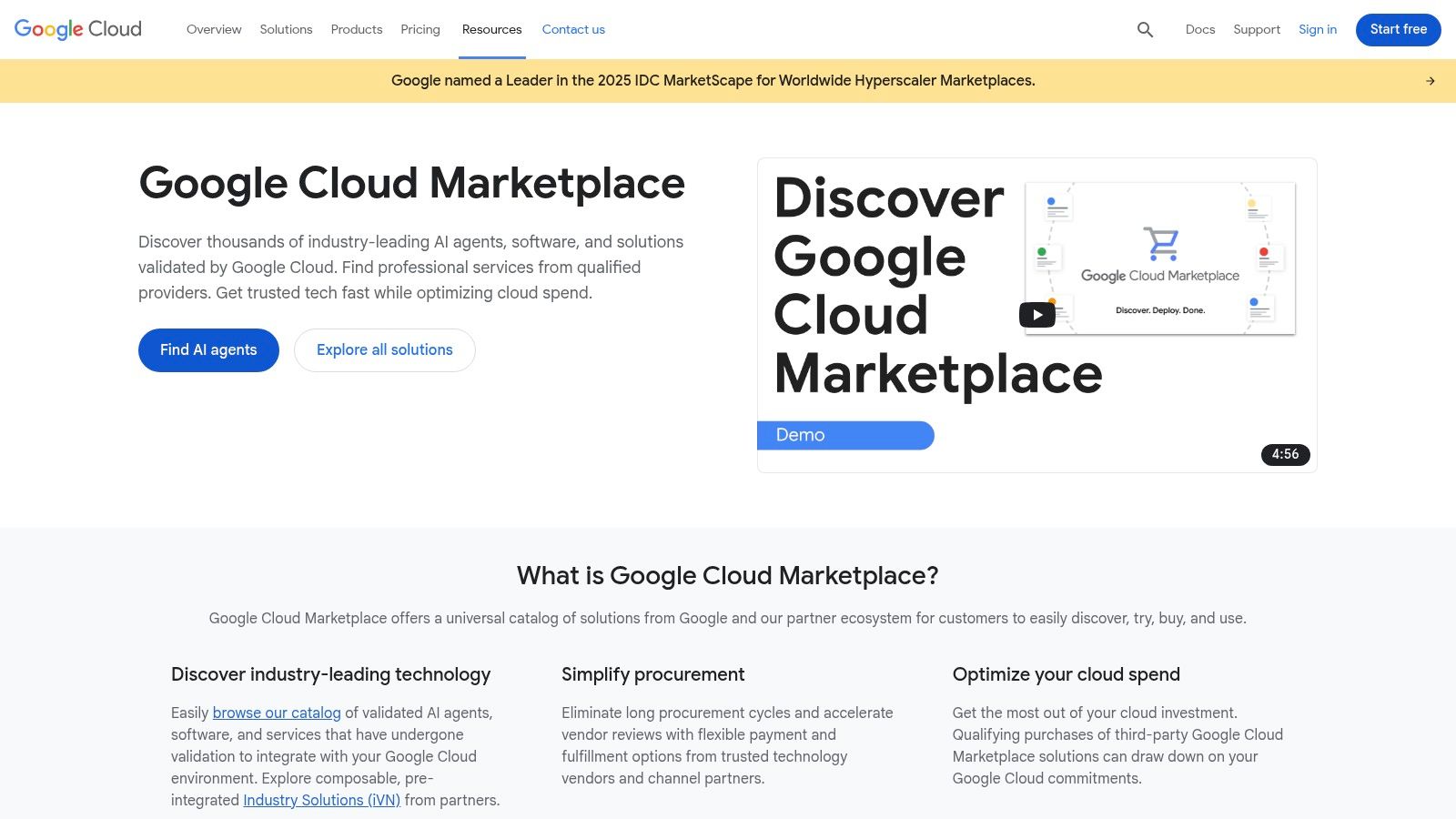
The key benefit is streamlined procurement and governance. Companies can leverage their established GCP billing and spending commitments to pay for expert services, unifying software and professional services costs under one roof. This provides fiscal control and visibility, which is a major draw for finance and procurement departments in larger enterprises already invested in Google Cloud.
Core Offerings and Use Cases
The marketplace connects customers with a network of specialized DevOps as a Service providers. It is not a direct service but a portal for engaging experts who can deliver:
- Managed Services: Outsource the day-to-day management of GCP infrastructure, including monitoring, patching, and security, using tools like Google Cloud Operations Suite.
- DevOps Enablement and Implementation: Hire partners to assess existing workflows and implement modern CI/CD pipelines with Cloud Build, Artifact Registry, and Cloud Deploy.
- Cloud Foundation and Assessment: Engage consultants to design and build a secure, scalable GCP landing zone or assess your current environment for optimization opportunities.
Pricing and Engagement Model
Similar to other cloud marketplaces, professional services on Google Cloud are transacted through "Private Offers." You identify a suitable partner, negotiate the scope and pricing, and they create a custom offer for you to accept through the marketplace. While this supports bespoke engagements, it lacks the immediacy of one-click purchases. A notable limitation is that professional service transactions are currently restricted by US location rules, which can be a barrier for global teams.
Website: https://cloud.google.com/marketplace/
5. Upwork (US DevOps Engineers and Teams)
For companies needing flexible, on-demand DevOps talent without the long-term commitment of a full-service agency, Upwork serves as a massive freelance marketplace. It allows businesses to directly hire individual US-based DevOps engineers or even assemble small, ad-hoc teams for specific projects. This model is ideal for startups filling temporary skill gaps or larger organizations needing burst capacity for a particular initiative.
The key advantage is speed and flexibility. Unlike traditional DevOps as a Service providers with structured onboarding processes, you can often find, vet, and hire a qualified engineer in days. The platform's transparent talent pool, complete with work histories, client reviews, and hourly rates, empowers businesses to make quick, informed hiring decisions to fill urgent needs.
Core Offerings and Use Cases
Upwork provides access to a wide range of independent specialists. The onus is on the hiring company to define the scope and manage the work, but talent is available for virtually any DevOps task:
- CI/CD Pipeline Setup: Hire an expert for a short-term project to configure a Jenkins, GitLab CI, or GitHub Actions pipeline.
- IaC Scripting: Find engineers proficient in Terraform or CloudFormation to automate infrastructure provisioning for a new application environment.
- Containerization Projects: Source a specialist to dockerize legacy applications or optimize a Kubernetes cluster configuration.
- Cloud Cost Optimization: Engage a consultant to analyze cloud spending and implement cost-saving measures on a contract basis.
Pricing and Engagement Model
The platform operates primarily on hourly or fixed-price contracts set directly with the freelancer. You can filter candidates by their desired hourly rate, making it easy to align with a specific budget. While this direct-hire model offers cost control, it places the full responsibility of vetting, management, and quality assurance on the buyer. The quality and rigor of DevSecOps practices can vary significantly between freelancers, requiring a thorough interview process to ensure a good fit.
Website: https://www.upwork.com/hire/devops-engineers/us/
6. Fiverr (DevOps & Cloud Engineering)
For startups and teams needing to address specific, well-defined technical gaps, Fiverr offers a tactical approach to procuring DevOps talent. It operates as a gig-based marketplace where freelancers and agencies package their services into discrete, fixed-price deliverables. This model transforms complex projects like setting up a CI/CD pipeline or configuring a Kubernetes cluster into a transactional purchase, removing the overhead of traditional contractor onboarding.
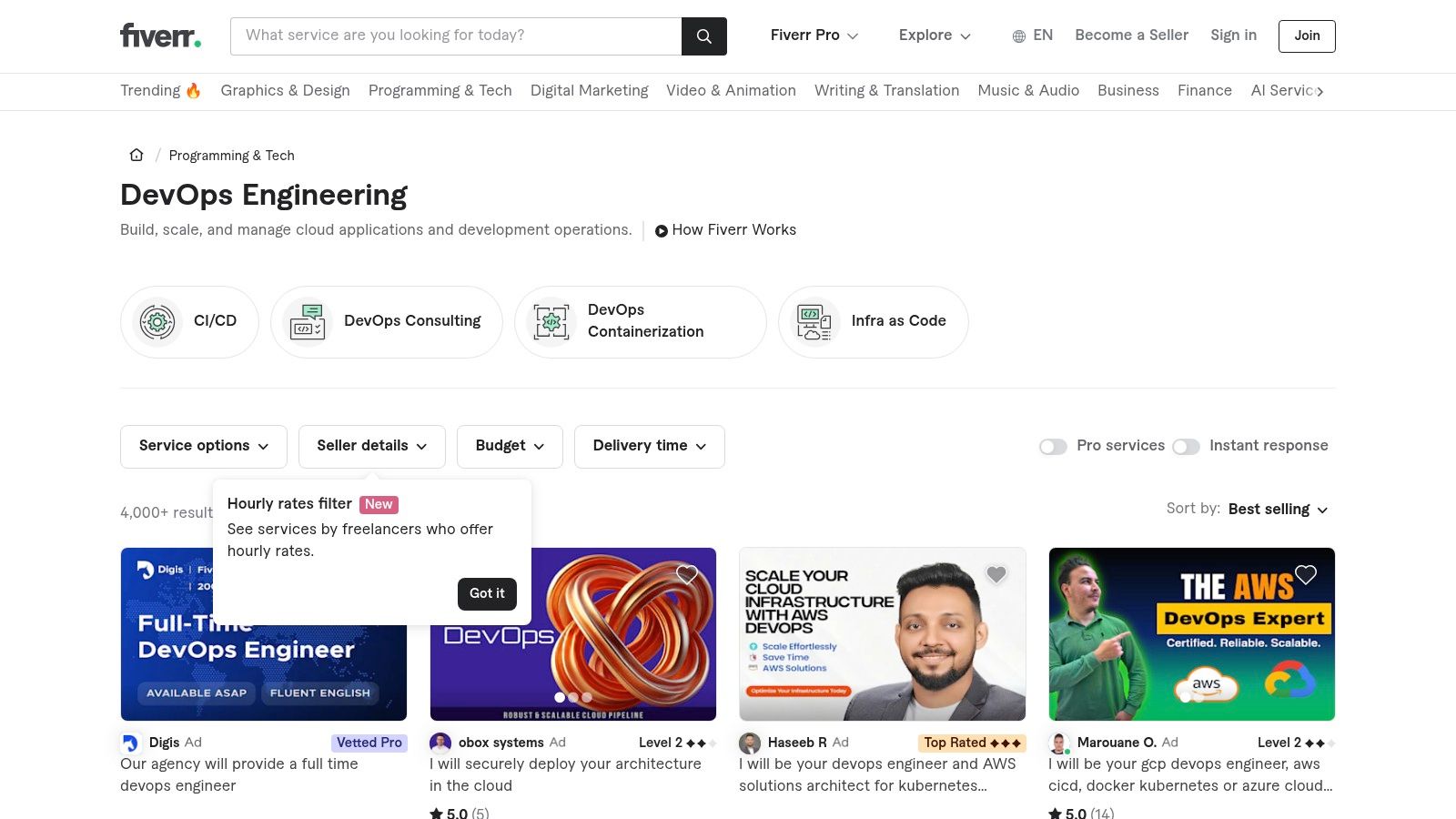
The primary advantage is its task-oriented, transactional nature. Instead of committing to a long-term engagement or a full-time hire, a company can quickly find an expert for a single task with a clear scope, timeline, and cost. This is ideal for prototyping, filling a short-term skill shortage, or experimenting with a new technology without significant upfront investment. The platform's built-in rating system, milestone payments, and messaging provide a structured framework for managing these small-scale projects.
Core Offerings and Use Cases
Fiverr’s strength lies in its catalog of specific, deliverable-focused gigs. You can find freelancers who are highly specialized DevOps as a Service providers for micro-tasks, including:
- CI/CD Pipeline Setup: Engage a specialist to build a complete pipeline using GitHub Actions, Jenkins, or GitLab CI for a specific application.
- Infrastructure as Code (IaC) Scripts: Commission an expert to write Terraform or CloudFormation scripts for a defined set of cloud resources.
- Containerization and Orchestration: Find talent to Dockerize an application or configure a basic Kubernetes (EKS, GKE, AKS) deployment.
Pricing and Engagement Model
The model is based on pre-packaged gigs with tiered pricing (Basic, Standard, Premium), allowing buyers to select a service level that matches their needs. This transparency is a key differentiator, as prices and delivery times are stated upfront. For more complex needs, vetted "Fiverr Pro" sellers offer higher quality and reliability. However, this model is less suited for comprehensive managed services requiring deep integration, ongoing support, or adherence to strict enterprise compliance standards.
Website: https://www.fiverr.com/categories/programming-tech/devops
7. Clutch (US DevOps Managed Services Rankings)
Clutch is not a direct service provider but a B2B research and reviews platform that helps businesses discover, vet, and shortlist potential partners. For companies seeking DevOps expertise, its curated lists of top US-based managed service providers offer a critical starting point for market research. The platform's value lies in its structured data and, most importantly, its verified client reviews.
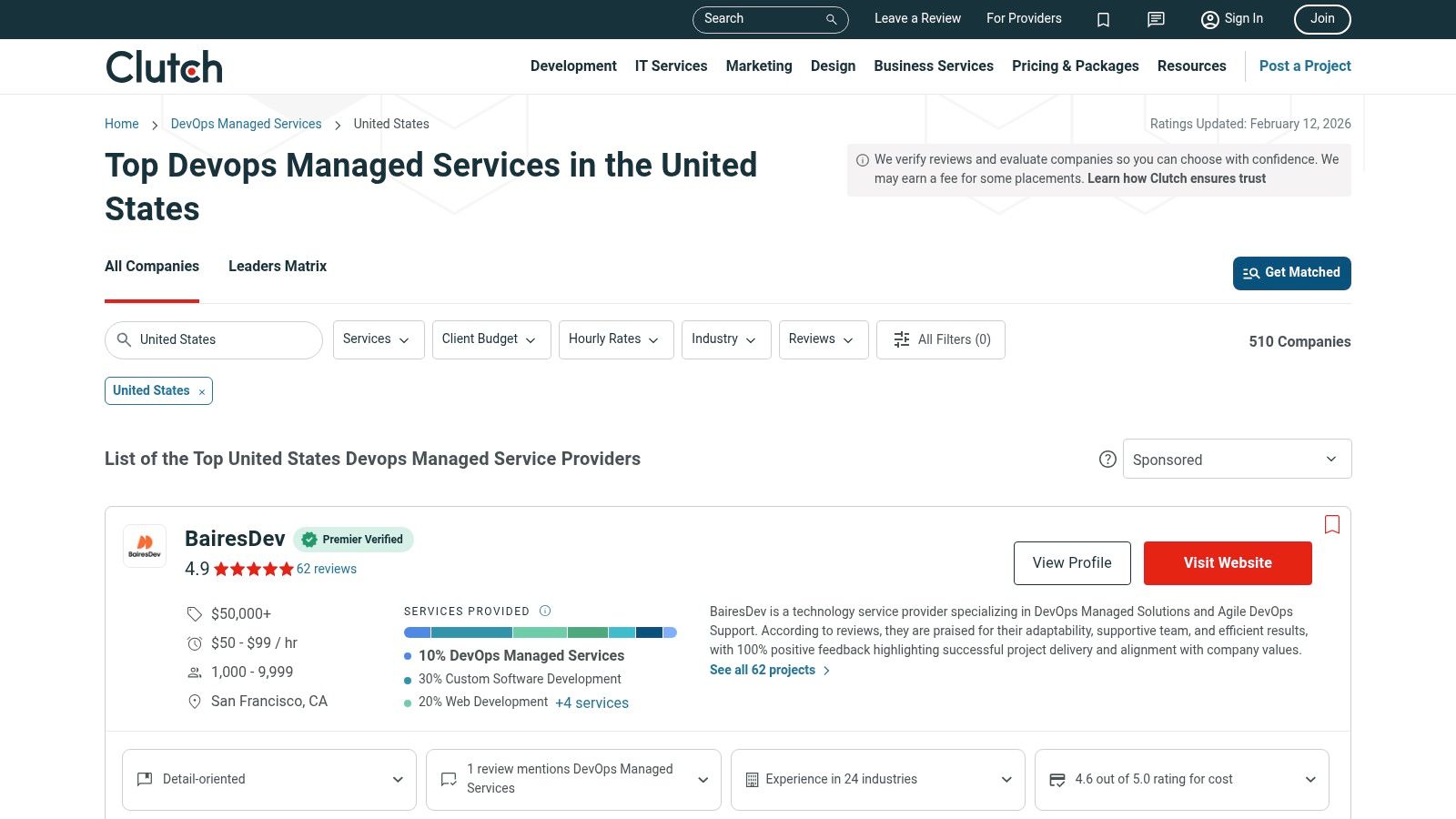
The primary advantage is the deep buyer insight from verified, qualitative reviews. Clutch analysts conduct phone interviews with former clients to gather unbiased feedback on a provider's performance, communication, and results. This process yields detailed, trustworthy testimonials that go far beyond a simple star rating, allowing you to assess cultural fit and technical competency before making contact.
Core Offerings and Use Cases
As a directory, Clutch connects you with DevOps as a Service providers that offer a full spectrum of services. The platform is best used for:
- Initial Discovery and Shortlisting: Use filters for budget, location, and industry focus to create a manageable list of potential vendors that meet your baseline criteria.
- Comparative Analysis: Quickly compare provider profiles side-by-side, looking at minimum project sizes, hourly rates, team size, and core service offerings.
- Qualitative Vetting: Dive deep into verified client reviews to understand how an agency handles challenges, communicates with clients, and delivers on its promises.
Pricing and Engagement Model
Clutch itself is free to use for buyers. The providers listed have diverse engagement models, from hourly consulting to fixed-price projects and monthly retainers. A key limitation is that all contracting and procurement happen off-platform; Clutch is strictly a discovery tool. While sponsored placements can influence a provider's visibility, the detailed reviews and robust filtering tools empower users to make informed decisions based on merit and fit.
Website: https://clutch.co/us/it-services/devops/msp
8. GoodFirms (DevOps as a Service Companies)
GoodFirms operates as a comprehensive research and review platform that helps businesses connect with service providers. For organizations seeking DevOps expertise, it offers a dedicated, curated directory of companies, complete with verified client reviews, detailed profiles, and objective ratings. It is particularly useful for due diligence, allowing teams to cross-check provider reputations and discover niche specialists that may not appear on larger marketplaces.
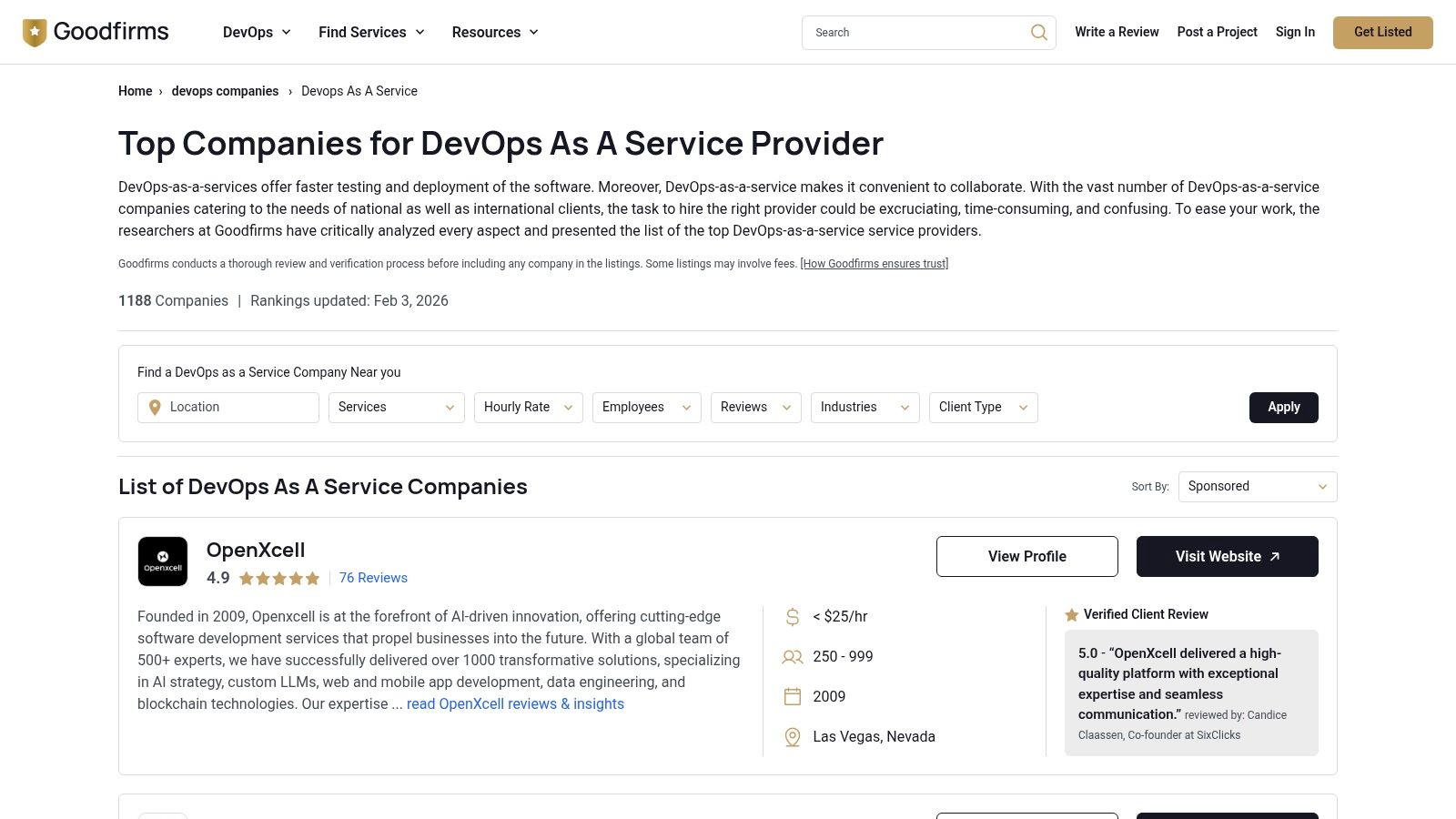
The platform’s key strength is its transparent evaluation methodology. GoodFirms assesses companies based on factors like market penetration, portfolio quality, and client feedback, culminating in a "Leaders Matrix" that visualizes top performers. This data-driven approach helps buyers move beyond marketing claims and identify DevOps as a Service providers with a proven track record of successful project delivery.
Core Offerings and Use Cases
As a directory, GoodFirms connects you with providers offering a full spectrum of DevOps services. You can use its powerful filtering to find partners for specific needs:
- Geographic and Niche Specialists: Filter vendors by location, team size, and industry focus to find a perfect-fit partner for your project, whether it's for fintech, healthcare, or SaaS.
- Cost-Effective Offshore Teams: Identify and vet global partners that offer competitive hourly rates for cloud engineering, CI/CD management, and 24/7 SRE support.
- Vendor Shortlisting and Comparison: Use the platform to build a shortlist of potential partners, compare their service offerings side-by-side, and read authentic reviews from past clients.
Pricing and Engagement Model
Pricing information on GoodFirms is typically presented in hourly rate bands (e.g., $25 – $49/hour), providing a general budget estimate rather than a fixed quote. To get precise figures, you must engage directly with the listed providers. While the platform includes many global firms, it's crucial for buyers to confirm timezone alignment and US-based support coverage if required. The detailed reviews and structured data make it an excellent resource for initial vetting before committing to deeper discovery calls.
Website: https://www.goodfirms.co/devops-companies/devops-as-a-service
9. Rackspace Technology (Elastic Engineering for DevOps)
Rackspace offers a distinct engagement model called "Elastic Engineering for DevOps," designed for enterprises that need scalable, embedded engineering talent rather than a fully outsourced managed service. This approach provides dedicated, cross-functional "pods" of engineers who integrate directly with a client's internal teams to co-create and operate cloud solutions across AWS, Azure, and Google Cloud. This model is ideal for organizations that want to augment their existing capabilities with specialized, on-demand expertise.
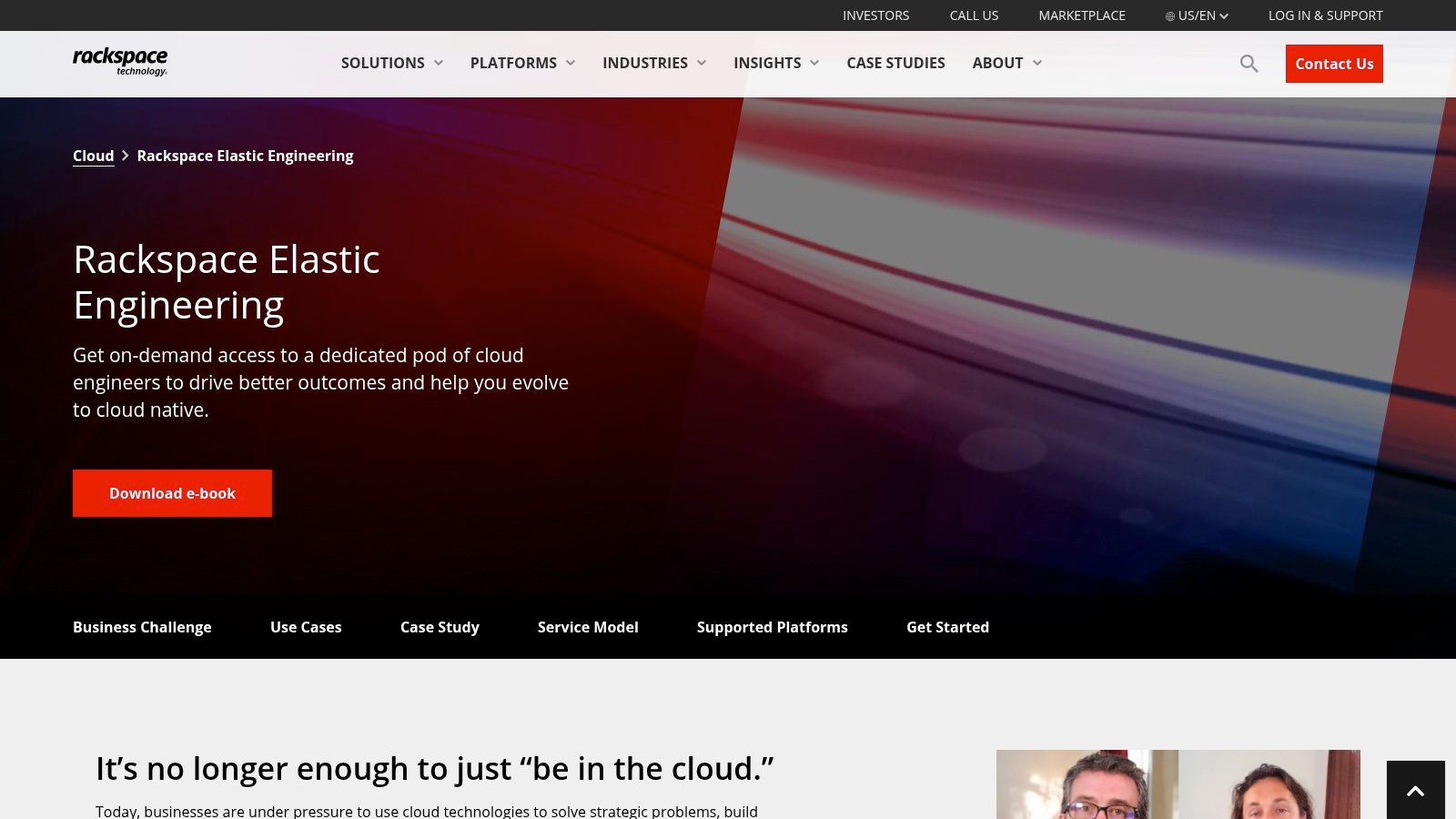
The core advantage is scalable, integrated expertise. Instead of a traditional project-based approach, clients get a dedicated team of named engineers who understand their environment and goals. This structure fosters deep collaboration and allows the client to direct the pod's focus toward evolving priorities, from platform modernization to security operations, without the overhead of constant re-scoping.
Core Offerings and Use Cases
Rackspace's Elastic Engineering pods are versatile and can be deployed for a range of strategic initiatives. As one of the more established DevOps as a service providers, they cover critical areas:
- Platform Operations and Automation: The pod can build and manage core infrastructure, automate deployments, and optimize performance across multi-cloud environments.
- CI/CD Pipeline Co-Delivery: Collaborate with the pod to design, implement, and secure your build and release processes. Understanding the fundamentals of what a CI/CD pipeline is is key to maximizing this collaboration.
- Cloud Security and FinOps: Leverage the pod for security posture management, compliance automation, and cloud cost optimization initiatives.
Pricing and Engagement Model
The model is retainer-based, where clients purchase a block of engineering hours from their dedicated pod. This provides flexibility to scale involvement up or down as needed. Due to its enterprise focus, pricing is not suitable for very small budgets, and a discovery phase is typically required to define the scope and provide an accurate quote via a Statement of Work (SOW). Their strong partner status and certifications make them a trusted choice for large-scale digital transformations.
Website: https://www.rackspace.com/cloud/elastic-engineering
10. Mission Cloud (AWS‑Focused DevOps Services)
For businesses committed to the AWS ecosystem, Mission Cloud operates as an AWS Premier Tier partner specializing exclusively in Amazon’s cloud environment. This deep focus allows them to offer highly optimized DevOps consulting and managed services that leverage the full power of AWS tooling. Their approach is less about being a generalist and more about being a master of one domain, making them a strategic partner for companies scaling on AWS.
The primary advantage is their pod-based delivery model, which provides dedicated, cross-functional teams for specific outcomes. This structure is designed for agility and rapid results, moving away from traditional, slow-moving consulting engagements toward a more collaborative and iterative partnership. Their status as an AWS Premier partner ensures their engineers are certified and aligned with AWS best practices for security and performance.
Core Offerings and Use Cases
Mission Cloud provides a suite of services designed to manage and optimize workloads exclusively on AWS. As one of the top-tier DevOps as a Service providers for the AWS cloud, they focus on:
- DevOps Consulting: Project-based engagements to design and implement CI/CD pipelines, containerization strategies with EKS, and Infrastructure as Code (IaC) using Terraform or CloudFormation.
- Managed CloudOps: A 24/7 service for monitoring, incident response, and proactive management of your AWS environment, ensuring uptime and operational excellence.
- Engineer Assist: A flexible, ad-hoc support service that gives internal teams direct access to DevOps experts for specific tasks, troubleshooting, or architectural guidance without a full SOW.
Pricing and Engagement Model
Mission Cloud’s engagement models are flexible, but all pricing is custom. Engagements typically begin with a consultation to define scope, after which a detailed Statement of Work (SOW) or a recurring service agreement is created. This model is ideal for organizations looking for a tailored, high-touch partnership. Their singular focus on AWS makes them an excellent choice for AWS-native companies but unsuitable for organizations pursuing a multi-cloud or hybrid strategy involving Azure or GCP.
Website: https://www.missioncloud.com/solutions/devops-services
11. Toptal (DevOps Services)
Toptal offers a unique model for DevOps as a Service, functioning as an elite talent network that connects businesses with the top 3% of freelance DevOps engineers and architects. Instead of providing a standardized platform, it offers access to highly vetted, senior-level experts for specific projects or as long-term additions to an existing team. This approach is ideal for companies that need to rapidly scale their DevOps capabilities with proven talent without the overhead of a traditional hiring process.
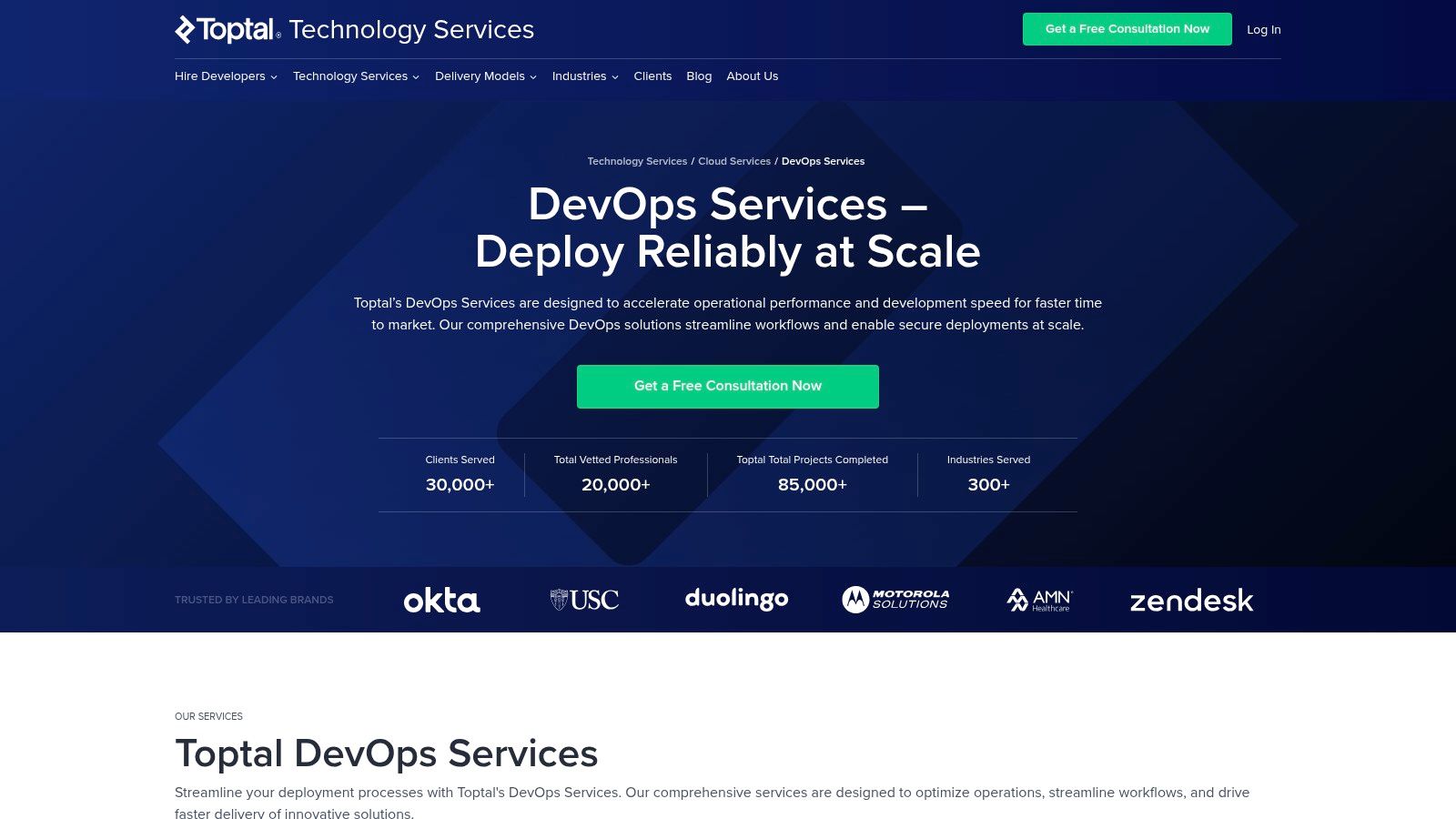
The primary advantage is access to elite, pre-vetted talent. Toptal's rigorous screening process ensures that every engineer has deep expertise in their domain, whether it's AWS, GCP, Azure, Kubernetes, or Infrastructure as Code. This saves companies significant time and resources in sourcing, interviewing, and validating candidates, allowing them to onboard a senior expert in as little as 48 hours.
Core Offerings and Use Cases
Toptal’s model is flexible, supporting both individual expert engagements and fully managed teams for specific outcomes. Common use cases include:
- On-Demand Expertise: Hire a single DevOps architect to design a scalable cloud infrastructure or a Kubernetes expert to troubleshoot a complex cluster issue.
- Managed CI/CD Pipeline Development: Engage a Toptal-managed team to build a secure, automated CI/CD pipeline from the ground up.
- DevSecOps Implementation: Bring in a specialist to integrate security practices and tools directly into your development lifecycle.
- Team Augmentation: Quickly add senior DevOps engineers to your in-house team to accelerate project delivery or backfill a critical role.
Pricing and Engagement Model
Engagements with Toptal are based on hourly, part-time, or full-time rates, which are at a premium compared to open freelance marketplaces. The cost reflects the caliber and experience of the talent. Clients deposit an initial amount to start the engagement, which is applied to their first invoice. The model requires clear project scoping to effectively manage costs, but it offers unparalleled flexibility to scale the team up or down as project needs evolve.
Website: https://www.toptal.com/services/technology-services/devops-services
12. Trek10 (AWS DevOps Services)
For organizations committed to an AWS-native strategy, particularly those leveraging serverless architectures, Trek10 stands out as a specialized AWS Premier Tier Partner. Instead of offering multi-cloud support, Trek10 focuses exclusively on the AWS ecosystem, providing deep expertise in building, managing, and optimizing environments with a serverless-first mindset. This singular focus makes them a top-tier choice for teams aiming to maximize their investment in services like Lambda, Fargate, and DynamoDB.
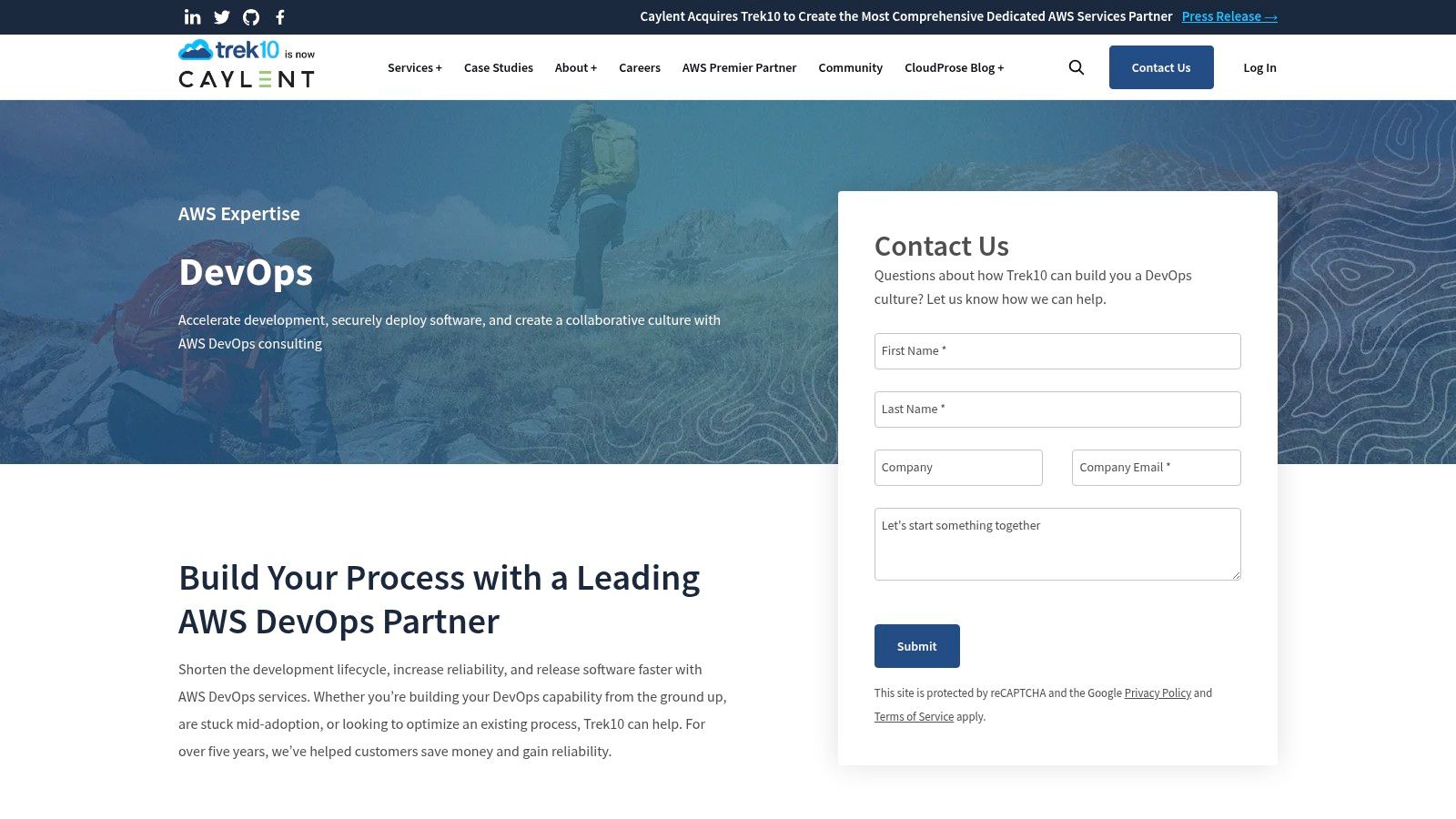
The core advantage of Trek10 is its deep, specialized AWS expertise. Their engineers live and breathe AWS, offering thought leadership and practical implementation skills that are hard to find. This makes them one of the most effective DevOps as a Service providers for companies that want to go all-in on AWS without spending years building the necessary internal talent.
Core Offerings and Use Cases
Trek10 tailors its services to accelerate delivery on AWS while ensuring security and operational excellence. Their primary engagement models are built around enablement and ongoing support.
- DevOps Enablement: Trek10 works with your team to implement CI/CD best practices, establish a solid Infrastructure as Code (IaC) foundation, and transfer knowledge.
- Serverless Architecture: They are experts in designing and building highly scalable, cost-efficient applications using serverless patterns.
- 24/7 CloudOps: Provides ongoing monitoring, incident response, and continuous optimization for mission-critical AWS workloads, acting as an extension of your operations team.
Pricing and Engagement Model
Engagements with Trek10 are highly customized. Pricing is not publicly listed and is determined after initial scoping calls where project requirements, complexity, and desired outcomes are discussed. A custom Statement of Work (SOW) is then created, outlining the deliverables and costs. This model is ideal for bespoke projects but is not suited for teams seeking off-the-shelf service packages. Their exclusive focus on AWS means they are not a fit for multi-cloud or hybrid-cloud strategies.
Website: https://www.trek10.com/devops
Top 12 DevOps-as-a-Service Providers Comparison
| Provider | Core features | Target audience | Value proposition | Quality & trust | Pricing & engagement |
|---|---|---|---|---|---|
| Group 107 (Recommended) | Dedicated offshore teams; end‑to‑end digital solutions (DevOps, AI, Fintech, accessibility) | Startups, product companies, enterprises, banks | Up to ~60% labor savings; faster time‑to‑market; single‑partner lifecycle delivery | 4.7/5 (22 reviews); client testimonials; IP protection | Quote‑based; embedded dedicated teams; no public hourly rates |
| AWS Marketplace (DevOps & Consulting) | Transactable catalog of vetted DevOps providers; AWS billing integration | AWS‑centric enterprises | Procurement & billing consolidation; private offers | Certified AWS partners; variable depth by listing | Private offers & custom SOWs via AWS account |
| Microsoft Azure Marketplace / AppSource | Packaged consulting offers; partner specializations; tenant contracting | Azure‑first teams and enterprises | Packaged scopes, partner credentials, Microsoft contracting | Partner specialization visible; mixed listing quality | Some fixed entry prices; mostly custom quotes |
| Google Cloud Marketplace (Professional Services) | Professional services listings (assessment, implementation, managed) | GCP‑based teams | Combined software+services procurement; consolidated billing | Marketplace governance; discoverable partner listings | Private offers; US transaction limits for services |
| Upwork (US DevOps Engineers & Teams) | Freelance marketplace; filters, escrow, work tracking | Startups needing flexible, on‑demand talent | Fast sourcing; transparent hourly rates | Wide talent pool; quality varies by freelancer | Hourly or fixed; visible rates; buyer vets talent |
| Fiverr (DevOps & Cloud Engineering) | Gig‑based deliverables (CI/CD, IaC, migrations) | Teams needing small, scoped tasks or prototypes | Clear scopes & fixed gig pricing; quick turnaround | Ratings & SLAs; variable enterprise readiness | Fixed gig prices; tiered packages (Pro for vetted sellers) |
| Clutch (US DevOps MSP Rankings) | B2B directory with verified client reviews and profiles | Buyers researching and shortlisting agencies | Deep qualitative reviews and side‑by‑side comparisons | Verified client reviews collected by analysts | Rates/minimums listed; contracting off‑platform |
| GoodFirms (DevOps as a Service) | Ratings, leader matrices, hourly rate bands | Buyers cross‑checking providers and niches | Methodology‑backed rankings; broad mid‑market coverage | Verified reviews; research methodology | Rate bands shown; quotes after outreach |
| Rackspace Technology (Elastic Engineering) | Pod‑based embedded teams; cross‑cloud ops and observability | Large enterprises needing named teams | Scales to 24/7 ops; strong certifications & ecosystem | Analyst presence; certified engineers | Enterprise pricing; SOW after discovery |
| Mission Cloud (AWS‑Focused DevOps) | AWS Premier partner; Elevate pods; managed CloudOps | AWS‑committed organizations | Deep AWS specialization; outcome‑focused pods | AWS Premier Tier; strong AWS alignment | Custom quotes following scoping |
| Toptal (DevOps Services) | Curated, highly vetted senior DevOps talent; managed options | Teams needing senior/rapid hires | High‑quality senior talent; quick staffing | High vetting standards; premium reputation | Premium rates; engagement/scoping required |
| Trek10 (AWS DevOps Services) | AWS‑only DevOps, serverless, IaC, monitoring | AWS‑native & serverless teams | Serverless expertise; IaC first approach | AWS Premier Tier; case studies on cost/perf | Quote‑based after scoping |
Choosing Your DevOps Partner: From Strategy to Execution
Navigating the landscape of DevOps as a service providers can feel overwhelming, but making an informed choice is a critical step toward achieving engineering excellence and accelerating your time-to-market. As we've explored, the market offers a diverse range of solutions tailored to different needs, from massive cloud marketplaces to specialized consultancies and flexible talent platforms. Your decision ultimately hinges on a clear understanding of your strategic goals, technical requirements, and desired level of partnership.
The key takeaway is that there is no one-size-fits-all solution. Your selection process must be as strategic as your DevOps roadmap itself. Choosing the right partner means aligning their core strengths with your specific business context.
Synthesizing Your Options: A Strategic Recap
Let's distill the primary decision paths based on the providers we've reviewed:
- For Cloud-Native Ecosystems: If your infrastructure is deeply embedded within a single cloud environment like AWS, Azure, or Google Cloud, leveraging their official marketplaces or specialized partners like Mission Cloud and Trek10 (for AWS) is a logical first step. These providers offer unparalleled platform-specific expertise, ensuring you maximize the value of your chosen cloud stack.
- For On-Demand Expertise and Scalability: When you need to augment your team with specific skills for a short-term project or fill a critical gap quickly, talent marketplaces like Toptal and Upwork are invaluable. They provide rapid access to a global pool of vetted DevOps engineers, offering flexibility without the long-term commitment of a full-time hire.
- For Holistic, Long-Term Partnership: For businesses seeking more than just a vendor-client relationship, a dedicated technology partner is essential. An integrated partner like Group 107 provides a dedicated, non-shared team that functions as a true extension of your own. This model is ideal for complex projects in fintech, enterprise modernization, and product development where deep domain knowledge, strategic oversight, and end-to-end accountability are paramount.
Actionable Next Steps: From Evaluation to Engagement
Armed with this information, your next steps should be methodical and purpose-driven. Don't rush into a decision; a misaligned partnership can lead to technical debt, missed deadlines, and wasted resources.
- Define Your Requirements: Create a detailed document outlining your technical needs (CI/CD, infrastructure as code, security, SRE), business objectives (faster releases, cost reduction, improved stability), and cultural fit (communication style, collaboration tools, time zones).
- Shortlist 2-3 Providers: Based on your requirements, select a small group of the most promising DevOps as a service providers for a deeper evaluation. For instance, you might compare a specialized AWS partner, a flexible talent platform, and an integrated technology firm.
- Conduct Due Diligence: Schedule discovery calls and prepare targeted questions. Ask for relevant case studies, client references, and a clear breakdown of their engagement model. This is also a good time to review foundational knowledge, as many principles for evaluating a DevOps partner overlap with guides on how to choose a cloud provider due to the cloud-centric nature of modern DevOps.
- Assess Technical and Cultural Fit: Beyond technical prowess, evaluate their communication processes and project management methodologies. A successful DevOps partnership is built on transparency, shared goals, and seamless collaboration.
Ultimately, choosing a DevOps partner is an investment in your company's future. The right provider won't just implement tools; they will help you build a resilient, scalable, and innovative engineering culture that drives tangible business outcomes and a sustainable competitive advantage.
Ready to build a high-performing engineering practice with a partner that delivers strategic value beyond just implementation? Group 107 provides dedicated, expert teams that integrate seamlessly with your organization to accelerate product development, modernize infrastructure, and drive real business growth. Schedule a consultation with Group 107 to discover how our integrated DevOps services can transform your technology roadmap.